
Crawler mobile crushing plant
Conquer Any Terrain with ASTON Crawler Mobile Crushing Plant
Available in jaw, cone, impact, and combined configurations for on-site crushing in the toughest, most remote locations.
Take crushing power straight to the working face—across hard-rock mines, sub-zero regions, and confined demolition sites—with ASTON crawler mobile crushing plants. Fully self-propelled and requiring zero concrete foundations, they track over rugged, off-grid terrains where wheeled equipment stalls, ready to set up and crush within minutes.
Every ASTON crawler mobile crushing plant for sale is engineered for all-terrain endurance, high-tonnage throughput, and relentless heavy-duty processing, keeping your production lines moving while extinguishing truck haulage, concrete foundation, and site preparation costs. Whether fracturing aggressive ore at a remote, off-grid quarry face or navigating a restricted urban demolition site, each unit is weaponized for your specific material and terrain to command maximum profitability at every stage.
Total mobility. Reliable output. Lower cost per ton.
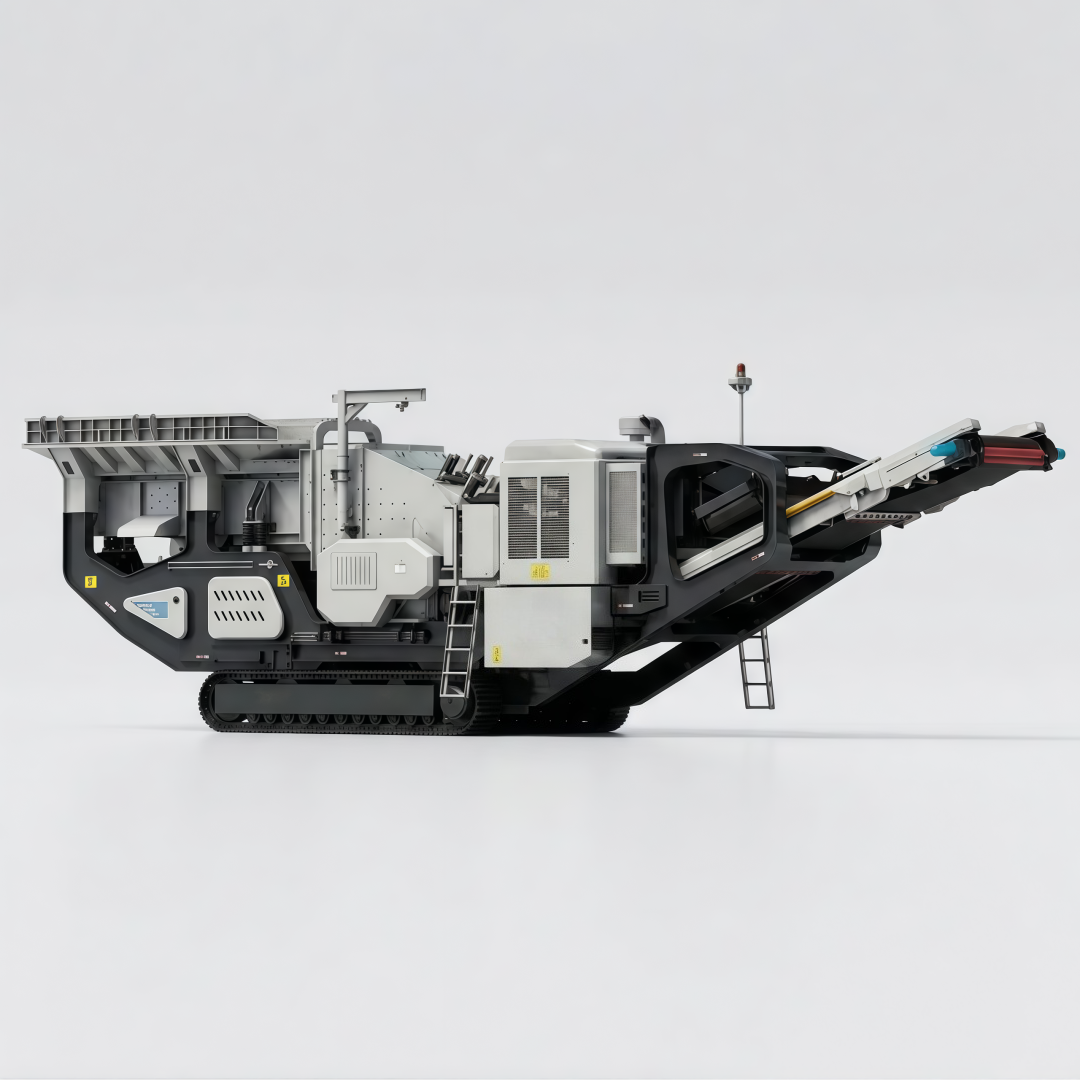
Explore our crawler mobile crusher solutions
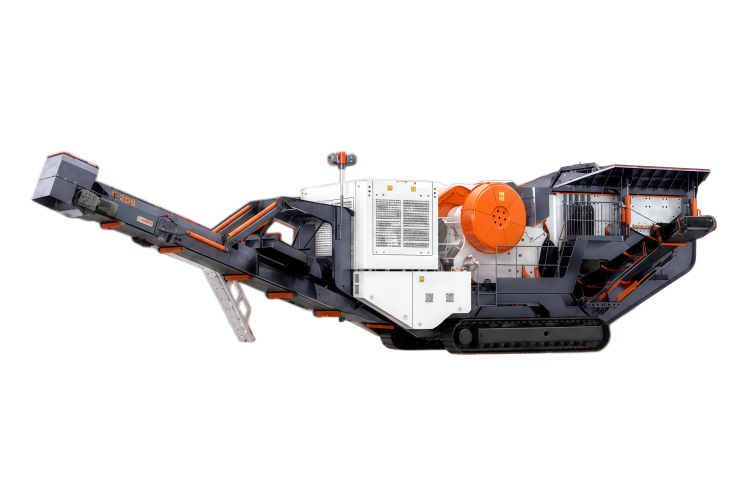
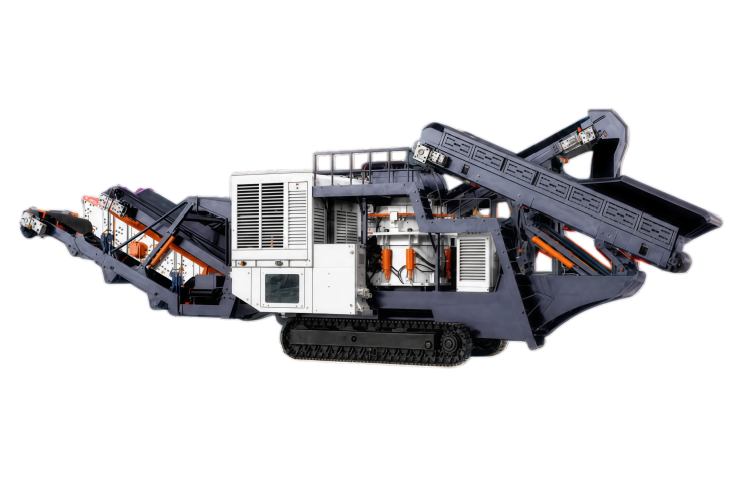
Crawler mobile cone crusher
Feeding size: 150-260mm
Capacity: 100-500tph
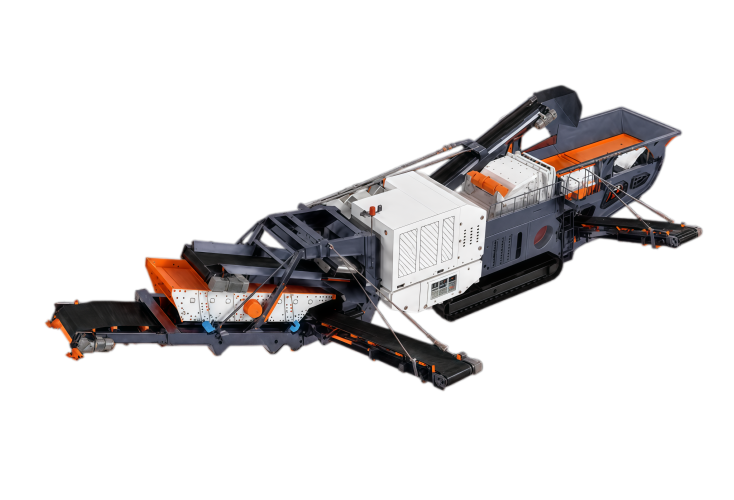
Crawler mobile impact crusher
Feeding size: ≤800mm
Capacity: 100-500tph
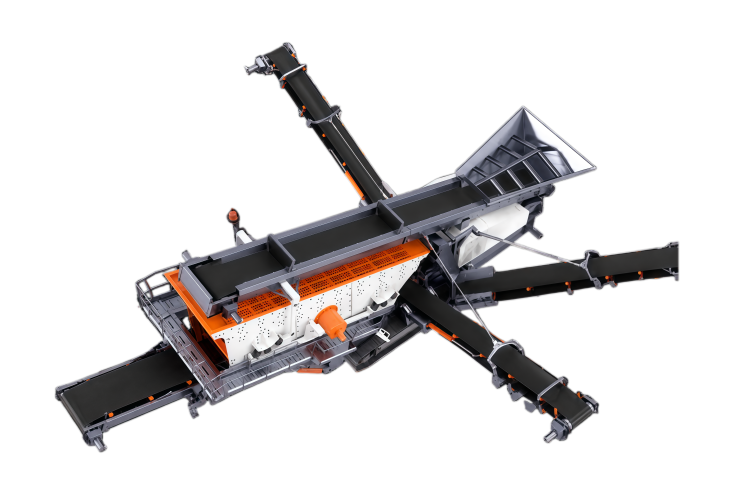
Crawler mobile screening crushing plant
Feeding size: 350-500mm
Capacity: 50–250tph
Materials processed by crawler mobile crushing plant

Basalt

Granite

Limestone

Marble

Pebble

Quartz

Copper ore

Gold ore

Iron ore

Lead zinc ore

Molybdenum ore

Nickel ore
Key benefits of Aston crawler mobile crushing plant for sale

Self-propelled mobility
Hydraulic-driven crawler tracks let the plant travel to the material and crush right at the source, dramatically cutting haul distances, fuel use, and truck hours. It repositions itself without trailers or tow trucks, pivots 360° in place within its own footprint even in confined areas, and can be safely relocated by a single operator via remote control.
Rapid deployment & All-terrain capability
With no foundation construction required, the unit goes from transport to operation in 30–60 minutes and tears down in under 2 hours. It operates stably across mountains, wetlands, sandy ground, and rocky terrain, with a climbing capacity of 15°–25°—reaching sites that wheeled equipment simply cannot.
Stable, safe & eco-friendly operation
A low center-of-gravity design with even weight distribution prevents tipping on slopes, keeping the stability factor ≥1.5 even on 20° inclines under full load. Meanwhile, low ground pressure (0.4–0.7 kg/cm²) reduces soil compaction and protects vegetation, while integrated noise-reduction and dust-suppression systems minimize environmental impact in sensitive areas.
Aston crawler mobile crushing plant for sale
ASTON offers a complete range of crawler mobile crushing plants for primary, secondary, and tertiary crushing applications, available in jaw, cone, impact, and combined configurations. Designed to match different materials, capacities, and project stages, our crawler plants deliver reliable, self-propelled performance across mining, quarrying, and construction-and-demolition recycling projects.
Four types of crawler crusher for sale
Crawler mobile jaw crushing plant
Feeding size: ≤750mm
Finished products size: 15-165mm
Capacity: 45-500tph
The crawler mobile jaw crushing plant is engineered for high-mobility, heavy-duty primary crushing operations in the most demanding environments. Integrating a high-performance jaw crusher with a robust tracked chassis, it delivers exceptional fuel efficiency, rapid setup times, and continuous high-throughput performance directly at the rock face.
Key Features:
- Heavy-duty tracked chassis for superior all-terrain mobility and rapid site relocation
- Advanced hydraulic drive system ensuring smooth operational control and excellent fuel economy
- Optimized jaw crusher geometry for maximum reduction ratios and reliable material bypass
- Intelligent control system with remote operation for enhanced job site safety and seamless integration
Application fields: Widely used in quarrying, mining, contractor crushing, and concrete recycling applications requiring extreme mobility and high-capacity primary reduction.
Specifications of crawler mobile jaw crushing plant
| Model | TC106 | TC116 | TC120 |
| Jaw crusher model | C106 | C116 | C120 |
| Maximum feeding size (mm) | 600 | 650 | 740 |
| Minimum outlet (mm) | 70-200 | 70-200 | 70-175 |
| Motor power (kw) | 110 | 132 | 160 |
| Main conveyor model | B1000*12m | B1000*12m | B1000*12.9m |
| Drive method | conveyor motor 11kw | conveyor motor 11kw | conveyor motor 15kw |
| Generator (kw) | 300 | 300 | 360 |
| Electrical system | The motor of the jaw crusher is driven by soft start, other motors are directly started. | ||
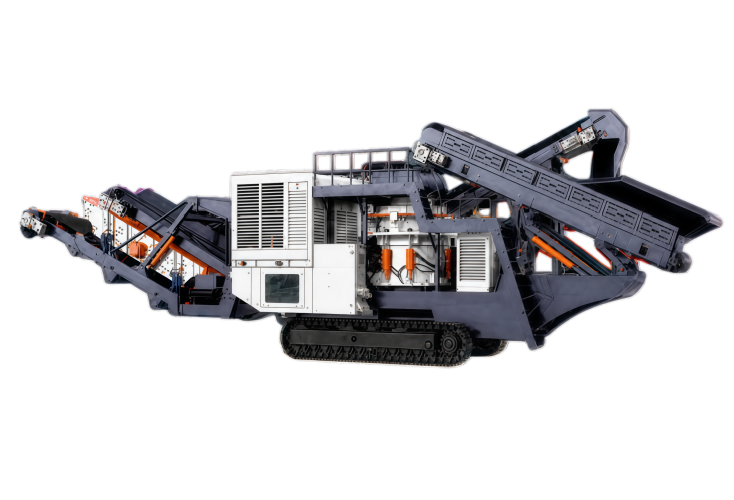
Crawler mobile cone crushing plant
Feeding size: 150-260mm
Finished products size: 10-20mm
Capacity: 100-500tph
The crawler mobile cone crusher is designed for high-efficiency secondary and tertiary crushing in demanding aggregate and mining operations. Combining a precision-engineered cone crusher with an agile tracked chassis, it delivers superior shaping capabilities, consistent cubical product size, and exceptional throughput while maximizing on-site mobility.
Key Features:
- High-efficiency cone crusher with optimized cavity design for maximum reduction ratios and cubical product shaping
- Heavy-duty tracked mobility for rapid deployment and effortless relocation across challenging terrains
- Advanced hydraulic tramp iron relief and clearing systems to maximize uptime and protect internal components
- Intelligent automated control for real-time monitoring, seamless material flow, and optimized fuel efficiency
Application fields: Engineered to dominate multi-stage quarrying, high-standard aggregate production, and mining processes that demand precise product graduation and continuous secondary or tertiary reduction.
Specifications of crawler mobile cone crushing plant
| Model | THP200 | THP300 | THP400 | ||||||||||||||
| Cone crusher Model | THP200 | THP300 | THP400 | ||||||||||||||
| Maximum feeding size (mm) | 150 | 200 | 260 | ||||||||||||||
| Minimum outlet (mm) | 16 | 10 | 20 | ||||||||||||||
| Motor power (kw) | 160 | 220 | 280 | ||||||||||||||
| Return screen model | YK 1500*3800 | YK 1600*4000 | YK 1500*3800 | ||||||||||||||
| Drive method | vibration motor 3.7 kw*2 | vibration motor 3.7 kw*2 | vibration motor 3.7 kw*2 | ||||||||||||||
| Generator (kw) | 320 | 500 | 500 | ||||||||||||||
| Electrical system | The cone crusher motor is started by frequency conversion, the feeder is started by frequency conversion, and other motors are started directly. | ||||||||||||||||
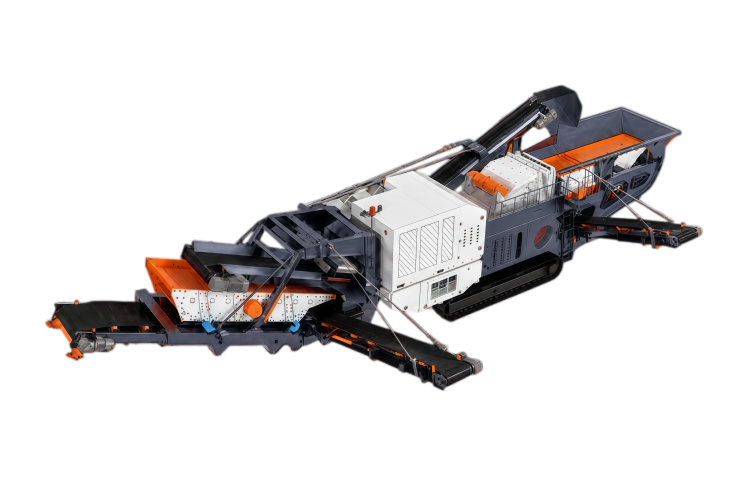
Crawler mobile impact crushing plant
Feeding size: ≤800mm
Capacity: 100-500tph
The crawler mobile impact crushing plant is engineered for high-capacity, flexible processing of soft-to-medium-hard materials and recycling concrete. By pairing a heavy-duty impact crusher with an agile tracked chassis, it delivers an exceptional reduction ratio, high-quality cubical end products, and maximum adaptability across multiple job sites.
Key Features:
- Powerful impact crusher with optimized rotor to ensure consistent cubical product shape and high throughput
- Heavy-duty tracked chassis for smooth all-terrain mobility and fast, tool-free site setup
- Efficient screening and recirculation systems (optional) for producing calibrated end products in a single pass
Application fields: Widely used in limestone quarrying, concrete and asphalt recycling, demolition waste processing, and contractor crushing applications requiring superior product shaping and high reduction efficiency.
Specifications of crawler mobile impact crushing plant
| Model | TF150 | TF250 | TF350 |
| Impact crusher model | LF150 | LF250 | LF350 |
| Maximum feeding size (mm) | 500 | 700 | 800 |
| Capacity (tph) | 100-200 | 200-400 | 300-500 |
| Motor power (kw) | 90-200 | 180-250 | 200-400 |
| Return screen model | 2YK1530 | 2YS1640 | YS1740 |
| Drive method | vibration motor 3.7 kw*2 | vibration motor 3.7 kw*2 | vibration motor 5.5 kw*2 |
| Generator (kw) | 360 | 500 | 520 |
| Electrical system | The impact crusher motor is started by frequency conversion, the feeder is started by frequency conversion, and other motors are started directly. | ||
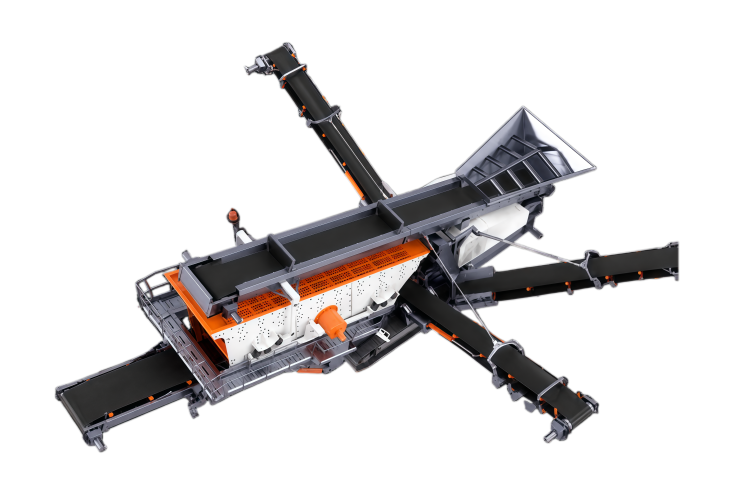
Crawler mobile screening crushing plant
Feeding size: 350-500mm
Capacity: 50–250tph
The crawler mobile screening and crushing plant is a highly integrated, single-unit solution designed for simultaneous material reduction and precise graduation. Combining a powerful crushing unit, a high-capacity multi-deck screen, and a robust tracked chassis, it delivers a complete, multi-product processing factory on tracks, ensuring maximum efficiency and minimized operational footprint.
Key Features:
- Fully integrated crushing and screening design to produce multiple calibrated end products in a single standalone pass
- Heavy-duty tracked chassis ensuring effortless mobility and quick autonomous transition between different working faces
- High-performance multi-deck vibrating screen with adjustable screening angles for maximum separation efficiency and throughput
- Optimized conveyor configuration with high discharge heights for efficient stockpiling and seamless material flow
Application fields: This mobile unit is designed for topsoil processing, aggregate sorting, coal mining, demolition waste recycling, and multi-product contractor crushing operations where on-site classification and extreme flexibility are paramount.
Specifications of crawler mobile screening crushing plant
| Model | TS1860 | TS2160 |
| Vibrating screen model | 1800 * 6000 (three story) | 2100 * 6000 (three story) |
| Maximum feeding size | ≤200 | ≤200 |
| Capacity (tph) | 65-586 | 81-720 |
| Motor power (kw) | 22 | 30 |
| Feeding belt conveyor model | B1000*11.8m | B1000*11.8m |
| Circular polyester canvas belt | EP-200-B1000*4 | EP-200-B1000*4 |
| Generator (kw) | 360 | 500 |
| Electrical system | Screen display engine operation parameter monitoring, track walking, and remote control of each belt conveyor for operation | |
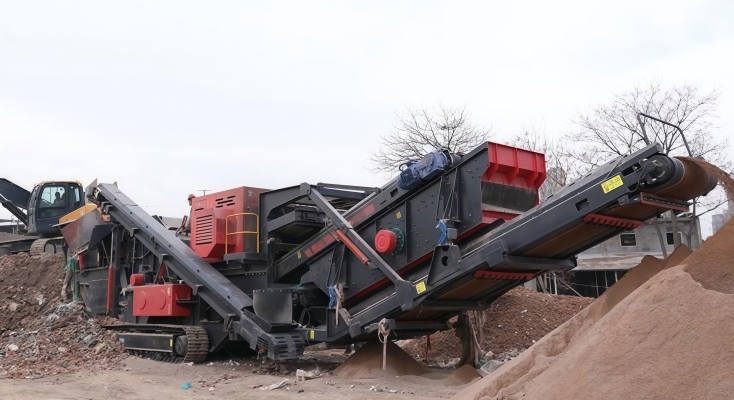
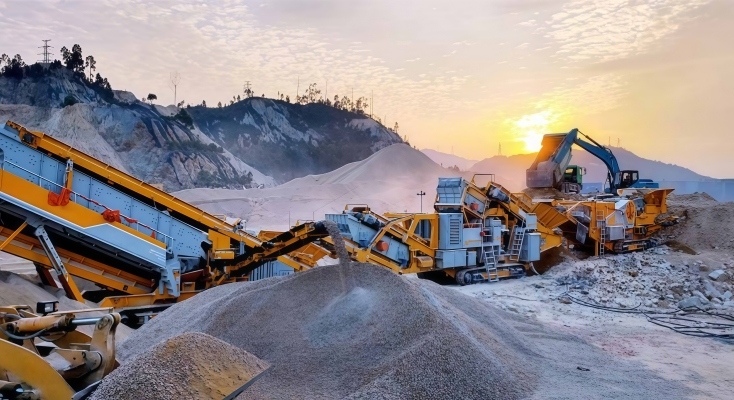
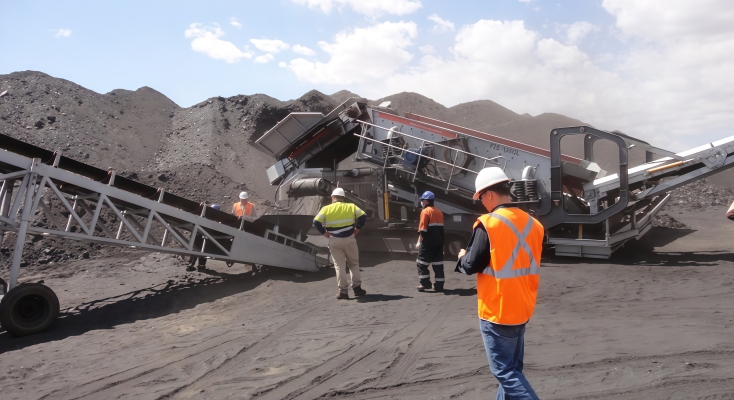
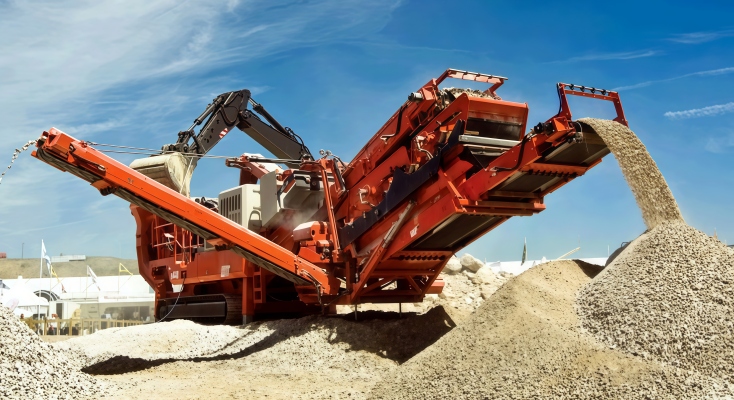
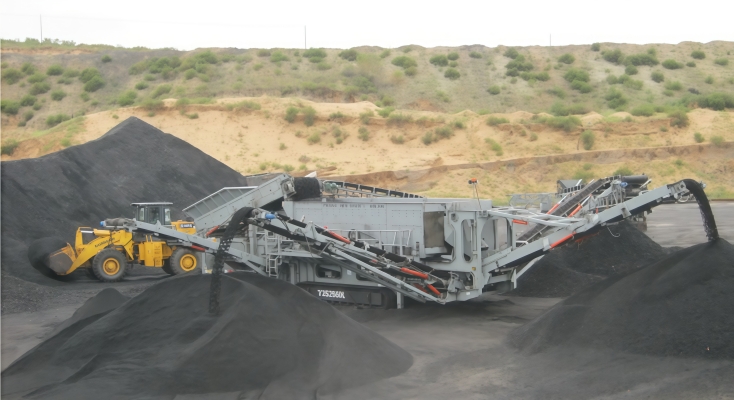
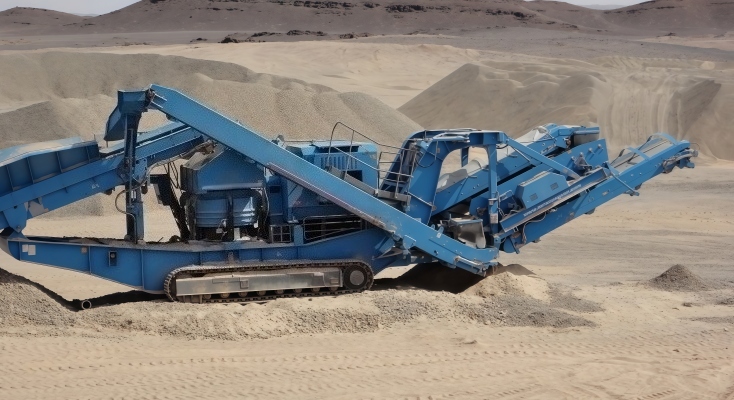
Crawler mobile crushing plant on-site operation:
Compare crawler crusher and wheel type crusher
Crawler crushing plant

Wheel type crushing plant

Terrain adaptability
All-terrain (slopes, mud, soft ground)
Paved or hard surfaces only
Climbing capacity
Strong (typically 20° ~ 30°)
Weak (typically <10° ~ 15°)
Self-propulsion
Fully self-propelled; pivot turning
Requires a truck tractor to relocate
Power flexibility
Diesel-reliant; highly self-contained for remote, off-grid sites
Grid-compatible; easily plugs into local electric power to cut costs
Long-distance logistics
Complex and costly; requires flatbed trailers and oversize permits
Simple & economical; towed directly on highways by truck tractors
Municipal compliance
Restricted; steel tracks will damage asphalt pavement
Friendly; rubber tires cause zero damage to city streets
Investment
Higher initial investment; highly durable chassis with low asset depreciation
Lower initial investment; ideal for short-term contracting
Best for
Heavy-duty quarrying or mining on rugged, unpaved terrains where on-site maneuverability and durability are crucial
Business relies on frequent highway relocation across multiple municipal or road construction sites
Compare crawler crusher and wheel type crusher
Crawler crushing plant
Terrain adaptability
All-terrain (slopes, mud, soft ground)
Climbing capacity
Strong (typically 20° ~ 30°)
Self-propulsion
Fully self-propelled; pivot turning
Power flexibility
Diesel-reliant; highly self-contained for remote, off-grid sites
Long-distance logistics
Complex and costly; requires flatbed trailers and oversize permits
Municipal compliance
Restricted; steel tracks will damage asphalt pavement
Investment
Higher initial investment; highly durable chassis with low asset depreciation
Best for
Heavy-duty quarrying or mining on rugged, unpaved terrains where on-site maneuverability and durability are crucial
Wheel type crushing plant
Terrain adaptability
Paved or hard surfaces only
Climbing capacity
Weak (typically <10° ~ 15°)
Self-propulsion
Requires a truck tractor to relocate
Power flexibility
Grid-compatible; easily plugs into local electric power to cut costs
Long-distance logistics
Simple & economical; towed directly on highways by truck tractors
Municipal compliance
Friendly; rubber tires cause zero damage to city streets
Investment
Lower initial investment; ideal for short-term contracting
Best for
Business relies on frequent highway relocation across multiple municipal or road construction sites
Crawler mobile crushing plant features:
- High-quality wear parts: our jaw plates and impact liners use Mn18Cr2 high-manganese steel, extending service life by 30% ~ 50% over standard Mn13 to crush 80,000 ~ 120,000 tons of granite per set under hard rock conditions.Cone liners feature Mn22Cr2 high-alloy steel with secondary water-toughening (HRC 52–58) for maximum durability.Every batch is shipped with a third-party material test certificate (MTC) to guarantee alloy integrity.
- Servo pilot operating system: High-response imported servo pilot valves deliver stepless proportional control across all hydraulic functions with zero perceptible lag. The result is smoother material handling and more consistent crusher loading under variable feed conditions.
- Advanced crushing chamber & kinematics: Optimized stroke, nip angle, and chamber profile deliver higher reduction ratios, cubical product shape, and up to 15–25% throughput uplift versus conventional chambers.
- Heavy-duty tracked chassis: Reinforced box-section frame, high-traction triple-grouser track shoes, and gradeability up to 30° ensure stable transport across rugged job sites without auxiliary haulage equipment.
- Intelligent control system: One-button startup via dual-mode PLC touchscreen sequences the entire crushing line automatically, with a manual override panel for maintenance and emergencies. Key parameters—feed rate, crusher load, discharge setting—display in real time on a centralized HMI, reducing operator training needs and human error.
Crawler mobile crushing plant price
The table below provides reference pricing across the capacity ranges of our main crawler mobile crushing plant for sale models:
| Type | 100–300TPH | 300–500TPH | >500TPH |
| Crawler jaw crushing Plant | $180,000 – $380,000 | $380,000 – $650,000 | $650,000 – $1,200,000 |
| Crawler impact crushing plant | $200,000 – $420,000 | $420,000 – $720,000 | $720,000 – $1,300,000 |
| Crawler cone crushing plant | $220,000 – $450,000 | $450,000 – $780,000 | $780,000 – $1,500,000 |
| Crawler screening & crushing plant | $150,000 – $320,000 | $320,000 – $580,000 | — |
The prices listed above are for reference only.
In practice, the actual cost of a mobile crushing plant is influenced by multiple technical variables, including the specific equipment model, physical dimensions, material hardness, and optional auxiliary systems.
Send us your material type, feed size, and target capacity — our engineers will provide a tailored quotation within 24 hours.
Versatile applications for crawler mobile crushers
From primary crushing of abrasive hard rock at remote, pit-head mining fronts to processing recycled concrete in tightly constrained urban demolition sites, ASTON crawler mobile crushing plants are engineered to perform reliably across a wide range of volatile environments.
By efficiently reducing large feed sizes directly at the material source, these mobile units drastically cut downstream hauling logistics, ensuring rapid project turnaround and continuous high-performance output for various industries.
Typical application areas
Mountain quarry bench crushing:
On hillside quarries with descending working faces and 15°–25° unpaved slopes, where wheeled equipment cannot reach the upper benches, crawler crushing plant moves between elevations under its own power, following the working face downward and eliminating long-haul rock transport.
- Materials & Output: granite and limestone blasted rock→ 5–31.5mm graded aggregates
- Recommended configuration: crawler jaw crusher + crawler cone crusher
In-pit crushing for open-pit mines:
In deepening open-pit mines, crawler plants operate directly on the pit floor and advance with the extraction face to crush ore for direct conveyor transport. This in-pit crushing eliminates expensive, high-fuel truck haulage on loose gravel roads, where wheeled units risk slipping.
- Materials & Output: iron / copper / gold ore → ≤20mm mill feed
- Recommended configuration: heavy-duty crawler jaw crushers + crawler cone crusher
Riverbed & Wetland aggregate extraction:
The boat-shaped crawler chassis with its low ground pressure (0.4–0.7kg/cm ²) allows stable operation and site mobility on soft, muddy terrains, preventing the sinking issues that halt wheeled equipment. This inherent advantage makes crawler plants ideal for all-weather, wetland-specific aggregate operations.
- Materials & Output: river cobbles / sand-gravel mix → 5–25mm concrete aggregates, 0–5mm manufactured sand
- Recommended configuration: crawler impact crusher + crawler screening plant
Remote hydropower station aggregate production:
In remote canyon hydropower projects with unbuilt or restricted access roads, crawler plants can self-propel directly into off-road construction sites. As quarry locations relocate over the 3 to 5 years construction cycle, these units walk independently to new material reserves, bypassing disassembly or foundation construction delays.
- Materials & Output: canyon limestone/granite→ 5–20mm dam concrete aggregates, 0–5mm mortar sand
- Recommended configuration: crawler jaw crusher + crawler cone crusher + crawler screening line
Crawler mobile crushing plant main components
ASTON crawler mobile crushing plants are built around a highly integrated and heavy-duty chassis system. Each core component is precisely engineered to ensure seamless system integration, rapid hydraulic setup, and sustained, high-efficiency material processing in the most demanding environments.
The crawler chassis utilizes an integral, welded boat-shaped frame with rigid beam-and-column construction to distribute weight evenly across its footprint. Independent hydraulic motors drive each track, enabling in-place pivot turning and 15°–25° gradient climbing. Equipped with bolt-locked, two-speed track shoes, the assembly features automatic hydraulic cylinder tensioning to eliminate manual adjustment.
A variable-frequency drive (VFD) regulates the feed rate across a dual-deck system. The top grizzly deck bypasses coarse rock, while the bottom mesh or rubber plates remove fines and impurities before the crushing chamber.
The core crushing unit, configurable as jaw, impact, cone, or vertical shaft impact based on material hardness and product requirements.
High-impact EP composite-layer rubber belts (tensile strength ≥630 N/mm) are utilized for rock resistance. The side discharge conveyors feature a hydraulic folding mechanism that collapses the assembly to transport width, eliminating manual disassembly during relocation.
What materials can our crawler mobile crushing plant process?
ASTON crawler mobile crushing plants are engineered for highly flexible operations, delivering powerful primary, secondary, or tertiary crushing directly at the material source. Whether deployed in remote, rugged mountainous mines or restricted urban recycling sites, our mobile units deliver stable, high-throughput performance across a wide range of demanding industries.
1. Hard & Abrasive rocks (mining & quarrying)
Designed with a heavy-duty, all-terrain chassis and robust structural reinforcement, ASTON mobile plants efficiently process ultra-hard natural stones directly at the blasting face, including:
- Granite, Basalt, Quartz, River Pebble, and Andesite.
Eliminating the need for expensive haul truck fleets to transport raw materials to stationary lines, these mobile units serve as the preferred pit-head solution to slash upfront operational expenses.
2. Construction & Demolition waste (urban recycling)
Equipped with highly wear-resistant crushing elements and a dual-deck pre-screening VFD feeder, Aston mobile plants effortlessly swallow bulk rubble, including:
- Demolition Concrete, Brick Rubble, Masonry, and Asphalt Pavement.
By processing waste directly on-site in urban areas, this approach avoids heavy landfill disposal fees and turns environmental liabilities into high-value recycled aggregates.
3. Metal ores (mineral processing)
Featuring an integrated, aggressive crushing cavity capable of handling high material density, ASTON mobile units provide aggressive reduction ratios for high-grade ores, including:
- Iron Ore, Copper Ore, Gold-Bearing Quartz, and Manganese Ore.
Deploying mobile plants directly at remote mineral deposits simplifies the hauling logistics chain and accelerates the downstream milling and beneficiation process.
4. Overburden & Blasted muck (civil infrastructure)
Utilizing high-impact composite conveyor belts and heavy-duty vibrating grizzlies, the system fluidly manages unsorted, mixed-size materials from large-scale excavations, including:
- Excavated Sandstone, Weathered Limestone, Blasted Shale, and Slate.
This rapid setup allows infrastructure contractors to instantly convert tunneling or highway excavation muck into usable sub-base fill, eliminating material import costs.
5. Industrial slag & Bauxite (metallurgy & specialized applications)
- Steel Slag, Blast Furnace Slag, Bauxite, and Corundum-bearing Rock.
The mobile configuration allows metallurgical plants to reclaim and reprocess old slag stockpiles directly on-site, optimizing land utilization and capturing residual metallic value.
Not sure if your material is suitable? Contact us with your feed size and capacity requirements for a tailored recommendation.
Want to talk? Reach out to our experts
Choosing the suitable crusher type based on your application scenario
Since different job sites have different requirements for mobility, material hardness, crushing stages, and final aggregate quality, choosing a suitable jaw crusher, impact crusher, cone crusher, or combined crushing system can help the plant perform more reliably and deliver better results in real working conditions.
For remote or rough sites with large raw materials: choose a crawler mobile jaw crusher
A crawler mobile jaw crusher is mainly used for primary crushing. It is suitable for large feed size, hard materials, and rough working environments. With strong crushing force and good mobility, it can move close to the material source and reduce raw material transportation.
- Quarry face primary crushing: In quarry operations, raw stones are often located near the blasting or excavation area. A crawler mobile jaw crusher can move close to the quarry face and complete primary crushing directly on site.
- Remote mining site crushing: Mining sites are often far from fixed infrastructure and may have uneven ground conditions. A crawler mobile jaw crusher can handle large ore and hard rock while adapting to rough terrain.
- Mountain stone or river stone primary crushing: For large natural stones such as mountain stone or river stone, the jaw crusher can reduce the feed size before secondary crushing or screening.
For on-site recycling and material reuse: choose a crawler mobile impact crusher
A crawler mobile impact crusher is suitable for medium-hard materials and recycling applications. It offers high reduction efficiency and better particle shape, making it ideal for producing recycled aggregates directly at the project site.
- Construction and demolition waste recycling: Demolition sites often generate concrete blocks, bricks, and mixed construction waste. A crawler mobile impact crusher can process these materials on site and reduce waste transportation costs.
- Temporary concrete recycling projects: For temporary construction sites, waste concrete can be crushed and reused locally. The impact crusher helps produce well-shaped recycled aggregates for backfilling, road base, or construction use.
- Asphalt pavement recycling: During road maintenance or pavement renovation, asphalt materials are often distributed along the project route. A crawler mobile impact crusher can follow the work area and process materials efficiently.
For flexible production of high-quality aggregates: choose a crawler mobile cone crusher
A crawler mobile cone crusher is mainly used for secondary and tertiary crushing. It is suitable for hard and abrasive materials and can produce stable, high-quality aggregates in flexible or temporary production sites.
- Hard rock aggregate production near the quarry site: For granite, basalt, river stone, and other hard rocks, a crawler mobile cone crusher can be used after primary crushing to produce stable aggregate sizes near the quarry area.
- Temporary aggregate production for infrastructure projects: Road, railway, and hydropower projects may need aggregates close to the construction site. A crawler mobile cone crusher can reduce long-distance aggregate transportation and support flexible production.
- Commercial aggregate production with changing material sources: Some aggregate producers need to work across different quarry sections or material yards. A crawler mobile cone crusher can relocate easily while maintaining stable product quality.
Matching screen & conveyor specifications to your capacity and output requirements
Match the screen layers to the number of finished product sizes
The number of screen layers should be selected according to how many finished product sizes the project requires. A single-deck screen is suitable for simple separation, while a double-deck or triple-deck screen can classify materials into more product sizes.
The following table summarizes how the number of screen layers should match different output requirements.
| Output requirement | Recommended screen configuration | Typical use |
| One finished size and oversize return | Single-deck screen | Simple crushing and screening |
| Two finished sizes | Double-deck screen | Road base, recycled aggregates |
| Three or more finished sizes | Triple-deck or multi-deck screen | Commercial aggregate production |
Match the screen mesh size to the required output size
Screen mesh size directly affects the final product size. If the mesh opening is too large, oversized materials may enter the finished product. If it is too small, screening efficiency may drop and the system may become overloaded.
For crawler mobile crushing plants, common output requirements may include fine aggregates, medium aggregates, coarse aggregates, or recycled materials for backfilling and road base. The screen mesh should be selected based on the final use of the material, not only the crusher discharge size.
Match the conveyor belt width to the production capacity
Conveyor belt width should be matched with the plant capacity and material flow. If the belt is too narrow, it may limit the actual production capacity even if the crusher itself has enough output. A properly sized conveyor can keep material flow smooth and reduce blockage or spillage.
The table below shows the recommended conveyor belt configurations for different production capacities and material conditions.
| Small to medium capacity | Standard belt width |
| High capacity | Wider belt and stronger drive |
| Wet or sticky materials | Anti-slip belt, scraper, easier cleaning |
Evaluating power & fuel options for your operating environment
Power configuration is another key factor when choosing a crawler mobile crushing plant. Different power options affect not only the purchase price, but also operating cost, fuel consumption, emissions, and site flexibility.
The table below compares the three most common configurations:
| Power option | Main advantages | Limitations | Best for |
| Diesel power | Independent operation, fast deployment, high mobility | Higher fuel cost, more engine maintenance, emissions control required | Remote sites, temporary projects, areas without stable electricity |
| Electric power | Lower energy cost, quieter operation, fewer emissions, easier maintenance | Depending on stable power supply, needs cable layout and power connection | Long-term production sites, urban recycling projects, sites with grid power |
| Dual power | Flexible switching between diesel and electric power, better cost control | Higher initial investment, system configuration may be more complex | Projects with changing site conditions, contractors working across multiple sites |
We offer all three power configurations and can help you choose the most suitable solution based on your raw material, operating hours, jobsite layout, and overall cost goals.
Working process of crawler mobile crushing plant
A crawler mobile crushing plant follows a highly integrated and continuous workflow designed around rapid on-site processing. As a fully self-contained, mobile crushing solution, it eliminates the need for extensive raw material transport by handling size reduction directly at the blasting face or excavation site, ensuring seamless operational flexibility and maximizing overall project efficiency.
The hydraulic crawler chassis navigates rugged terrains to position the plant directly at the blasting face. Integrated hydraulic legs and folding hoppers deploy rapidly, eliminating the need for concrete foundations.
Excavators or wheel loaders dump raw materials into the heavy-duty hopper. The VFD vibrating feeder regulates the feed rate while the grizzly deck bypasses soil and fines to reduce crusher wear.
Materials enter the high-performance crushing chamber (jaw, cone, or impact). Strong mechanical forces instantly reduce large stones, ore, or demolition waste down to the specified target size.
As crushed material moves along the main conveyor, an over-belt magnetic separator automatically extracts rebar and tramp iron, safeguarding downstream equipment and ensuring recycled aggregate purity.
Finished materials are discharged via heavy-duty onboard conveyors. If a screening system is integrated, oversized products are automatically closed-looped back for re-crushing, while qualified sizes are cleanly stockpiled.
Budget-friendly solutions — 5 tips to cut costs without cutting corners
Choosing a budget-friendly crawler mobile crushing plant does not mean buying the cheapest machine. The smarter approach is to reduce unnecessary costs while keeping the machine reliable, efficient, and suitable for your real project needs.
Choose the right capacity
Do not over-configure the plant. If your project needs 200 T/H in continuous operation, buying a 400 T/H machine may increase both purchase cost and fuel cost. Match the machine with your real working capacity, not occasional peak demand.
Buy wear parts rationally, OEM parts are not necessary
Certified aftermarket wear parts can be a cost-effective option for jaw plates, liners, blow bars, and screen meshes. Before purchasing, ask for the Material Test Certificate, also known as MTC, to confirm material quality.
Start with standard configuration
For new or uncertain projects, start with a standard configuration first. Upgrade the engine, hydraulic system, automation system, or IoT monitoring later when the project scale grows. This can help reduce the initial investment.
Use financing and tax benefits
Check whether financing, accelerated depreciation, or local tax incentives are available in your market. A better payment plan can reduce upfront pressure and keep more cash flow for daily operation.
Consolidate orders and ship together
If you need a crusher, screen, conveyor, spare parts, and wear parts, try to place one combined order and ship them together. Full Container Load, or FCL, is usually more economical than Less than Container Load, or LCL.
Starting your crawler crushing project in 8 steps
Analyze your raw material
Start by confirming the type, hardness, moisture, clay content, maximum feed size, and impurity level of your raw material. Whether you process granite, limestone, basalt, river stone, or construction waste, these factors determine the right crusher type, wear parts, and screening configuration.
Define capacity and final product size
Set your target capacity and final output sizes before choosing equipment. A clear production goal helps match the right crawler jaw crusher, cone crusher, impact crusher, or screening plant, avoiding bottlenecks and unnecessary over-crushing.
Select the right crawler crushing configuration
Choose the equipment according to your material and application. A crawler jaw crusher is ideal for primary crushing of hard rock; a crawler cone crusher is suitable for secondary and tertiary crushing; a crawler impact crusher performs well in recycling and shaping applications. For higher efficiency, multiple crawler units can be combined into a complete crushing and screening line.
Check site conditions and mobility needs
Evaluate the ground condition, slope, access road, feeding area, stockpile space, and relocation frequency. Unlike stationary plants or wheel-mounted units, crawler crushing plants can move independently on rough terrain, making them especially suitable for quarries, mines, demolition sites, and temporary construction projects.
Plan an efficient site layout
Design the layout around crawler mobility. Place the crusher close to the material source, arrange conveyors and screens logically, and leave enough space for stockpiling and machine movement. As the working face changes, crawler units can be repositioned quickly to reduce hauling distance and operating cost.
Prepare site utilities and safety measures
Before startup, arrange fuel or power supply, water for dust suppression, drainage, lighting, and safe operating zones. With wireless remote control, our crawler mobile crushing plants allow operators to move and adjust the machine from a safe distance with better visibility.
Complete delivery, setup, and commissioning
Crawler crushing plants are usually transported by low-bed trailer and can be quickly driven into position after unloading. With integrated design, reinforced track frame, hydraulic drive, and pre-assembled modules, our machines require minimal foundation work and can enter trial operation faster.
Start production and optimize performance
After no-load testing and trial feeding, gradually increase the feed rate until the plant reaches stable production. During operation, monitor capacity, product size, fuel or power consumption, wear parts, screen efficiency, and track condition. With modular crawler design and reliable spare parts support, the production line can be adjusted, expanded, or relocated as your project develops.
Spare parts & Wear parts guide
Recommended stocking strategy for spare and wear parts
To keep a crawler mobile crushing plant running reliably, spare and wear parts should be prepared according to the actual working conditions. Daily operation usually requires essential maintenance parts, while hard rock crushing, remote job sites, and high-hour operation need a more targeted stocking plan:
| Project condition | Recommended stocking strategy |
| Standard operation | Keep essential maintenance parts such as filters, belts, hoses, fasteners, and lubricants for routine service |
| Hard rock crushing | Prepare additional wear parts, including jaw plates, cone liners, mantles, concaves, blow bars, and crusher liners |
| Remote job site | Stock critical spare parts before production starts, such as hydraulic components, sensors, bearings, motors, and track components |
| High-hour operation | Keep extra high-consumption parts such as screen meshes, conveyor belts, rollers, sealing parts, and commonly used crusher wear parts. |
We provide customized spare and wear parts support, including parts selection, stocking advice, timely supply, and maintenance guidance, helping customers reduce downtime and maintain stable production.
How to choose high-quality spare and wear parts
General spare parts
For general spare parts, such as filters, belts, hoses, bearings, sensors, hydraulic components, motors, rollers, and track components, it is important to confirm model compatibility, installation dimensions, technical parameters, and replacement convenience.
These parts may not always be directly exposed to the crushed material, but they strongly affect hydraulic performance, electrical control, conveying stability, and crawler travel safety.
Wear parts
For wear parts, such as jaw plates, cone liners, mantles, concaves, blow bars, impact plates, crusher liners, and screen meshes, material performance is especially important.
Buyers should check the material grade, hardness, casting quality, heat treatment process, and actual application experience. For key crusher wear parts, a Material Test Certificate, or MTC, can be requested to verify the chemical composition and mechanical properties of the material.
Maintenance guide & Troubleshooting
Crawler plants are often used in demanding environments, including quarries, mines, demolition sites, and construction projects. Regular inspection and timely troubleshooting help reduce unexpected downtime, extend equipment service life, and maintain stable production.
Recommended maintenance schedule
| Maintenance frequency | Main tasks |
| Daily | Check oil level, bolts, belts, screen mesh, material buildup |
| Weekly | Inspect wear parts, lubrication points, hydraulic hoses, rollers |
| Monthly | Check electrical system, crawler chassis, bearings, filters |
| Regular service | Replace oil, filters, worn parts, and inspect the whole machine |
A crawler mobile crushing plant can deliver stable performance only when maintenance is carried out regularly. Operators should follow the maintenance manual, keep inspection records, and replace worn or damaged parts before they cause larger failures.
Common problems and troubleshooting
| Problem | What to do |
| Low output | Adjust feeding, inspect wear parts, clean or replace screen |
| Oversized final product | Check screen mesh, adjust crusher setting, inspect return conveyor |
| Crusher blockage | Stop feeding, clear blockage safely, reduce feed size |
| Abnormal vibration | Tighten bolts, level the machine, inspect bearings |
| Conveyor belt deviation | Adjust loading point, inspect rollers, correct belt tension |
| Hydraulic oil leakage | Replace hose, tighten joints, change seals |
| Engine overheating | Clean radiator, check coolant, improve ventilation |
| Machine cannot travel | Check track system, hydraulic pressure, and control signals |
For serious faults, repeated alarms, or abnormal noise and vibration, operators should stop the machine immediately and contact professional service support.
Crawler mobile crushing plant market outlook
Current market landscape and growth drivers
The crawler mobile crushing plant market is growing steadily. Behind this growth are several macro trends: rising global demand for aggregates, expanding infrastructure investment, faster urbanization, and stricter rules on construction waste recycling. As these trends drive more activity in quarrying, mining, construction, and recycling, the need for efficient on-site material processing keeps rising.
In these projects, crawler mobile crushing plants are increasingly preferred over stationary and wheel-mounted units. Their tracked chassis, independent travel, and minimal foundation requirements let them work close to the material source, follow the working face, and move quickly between sites—exactly the flexibility today’s quarrying, mining, and recycling jobs need.
According to Verified Market Reports, the global crawler mobile crusher market was worth around USD 4.5 billion in 2024 and is expected to reach USD 6.91 billion by 2032, at a CAGR of 5.5%. IndustryARC also forecasts the broader mobile crushers and screeners market to reach about USD 4.75 billion by 2030, growing at 5.8% CAGR.
Technology trends: Electrification, automation, and AI scheduling
As demand grows, buyer expectations are changing too. Customers no longer judge crawler mobile crushing plants by capacity and mobility alone. They also care about energy efficiency, smart features, and long-term operating cost. Three technology trends are now shaping the market.
The first is electrification. Electric and hybrid models can cut fuel use, lower emissions, and improve energy efficiency when grid power is available. They are especially appealing for urban recycling projects, long-term aggregate sites, and regions with strict environmental rules, where cleaner operation and lower running costs are becoming key buying factors.
The second is automation. Modern crawler crushing plants now come with smart control systems, remote monitoring, auto-feeding adjustment, overload protection, and fault diagnosis. These features help keep production stable, reduce unplanned downtime, and make daily operation easier and safer—especially when crushing tasks change often between materials and project stages.
The third is unmanned operation and AI scheduling. Both are still in early stages, but the direction is clear. In the future, crawler crushing plants may work as connected nodes alongside excavators, loaders, conveyors, screens, and fleet systems. AI scheduling can fine-tune feeding rhythm, machine load, maintenance timing, and material flow across the site, turning separate machines into one coordinated, data-driven production line.
In line with these trends, our crawler mobile crushing plants are built for both today’s mobility needs and tomorrow’s smarter, cleaner production. We support customers across the full project cycle—from configuration and commissioning to operator training, remote support, and long-term parts and service—helping them build crushing systems that stay flexible, efficient, and competitive as the market keeps evolving.
Engineered to maximize your profitability
Up to 60%
Built on a heavy-duty hydraulic crawler chassis, the ASTON mobile plant advances directly alongside the blasting face. By crushing materials right at the quarry pit-head, it completely eliminates the need for expensive wheel loader and haul truck fleets to transport raw rock to a distant fixed station, flashing down your primary logistical asset investments.
Up to 40%
By matching an optimized crushing cavity profile with premium, high-manganese alloy wear liners, material flow friction is uniformly distributed across the crushing zone. This heavy-duty structural geometry prevents localized premature wear, drastically reducing unscheduled downtime and wear-part replacement costs in highly abrasive applications.
1 Single machine
ASTON crawler plants integrate feeding, aggressive crushing, over-belt iron separation, and closed-loop screening onto a single unified mobile chassis. By performing complex material classification entirely onboard, it delivers the precise product gradations of a multi-stage stationary factory without the complex network of transfer conveyors and separate sub-stations.
FAQs
Below are answers to some of the most common questions when selecting and operating a crawler mobile crushing plant.
The capacity of a crawler mobile crushing plant typically ranges from around 50 t/h to over 500 t/h, depending on the crusher type, model size, feed material, and configuration.Our team can recommend a suitable configuration based on your specific requirements.
Lead time depends on the model and configuration you choose. Standard models from our regular production line are typically available within a short lead time, while customized or large-tonnage configurations may require an extended schedule depending on the crusher type, screening system and special requirements.
A confirmed delivery date will be provided together with your order confirmation. Thanks to the fast-deployment design of our crawler crushing plants, on-site installation and commissioning can usually be completed within a short window after arrival, supported by our remote or on-site engineers.
After receiving your inquiry, our engineers first communicate with you to understand the material, capacity, site conditions and destination port, and recommend the most suitable model and configuration.
Once the order is confirmed, the plant enters production with progress updates shared along the way.Before delivery, every unit goes through a full factory test covering the crusher, screening system, hydraulics and electrical control.
With proper operation and regular maintenance, the main structure of a crawler mobile crushing plant can typically serve for 10 years or more.
Core components such as the crusher main frame, hydraulic system, and crawler chassis are designed for long-term reliability, while wear parts like jaw plates, cone liners, blow bars, screen meshes, and crawler shoes are replaced periodically based on operating hours and material conditions.
With timely maintenance and reliable spare parts support, the plant can maintain stable performance throughout its service life.