
Cone crushers
Shape Cubical Aggregates Precisely with ASTON Cone Crushers
Powerful crushing performance for hard materials across every stage
From hard-rock quarries to large-scale mining operations, a cone crusher is the workhorse of any efficient secondary or tertiary crushing circuit — delivering high reduction ratios, consistent product shape, and reliable uptime for the most demanding production schedules. Available as both stationary units and fully integrated mobile plants, our cone crusher for sale configurations are engineered to match every site condition and project scale.
With decades of engineering expertise and a global service network, our crushing solutions deliver the performance and flexibility your operation demands.
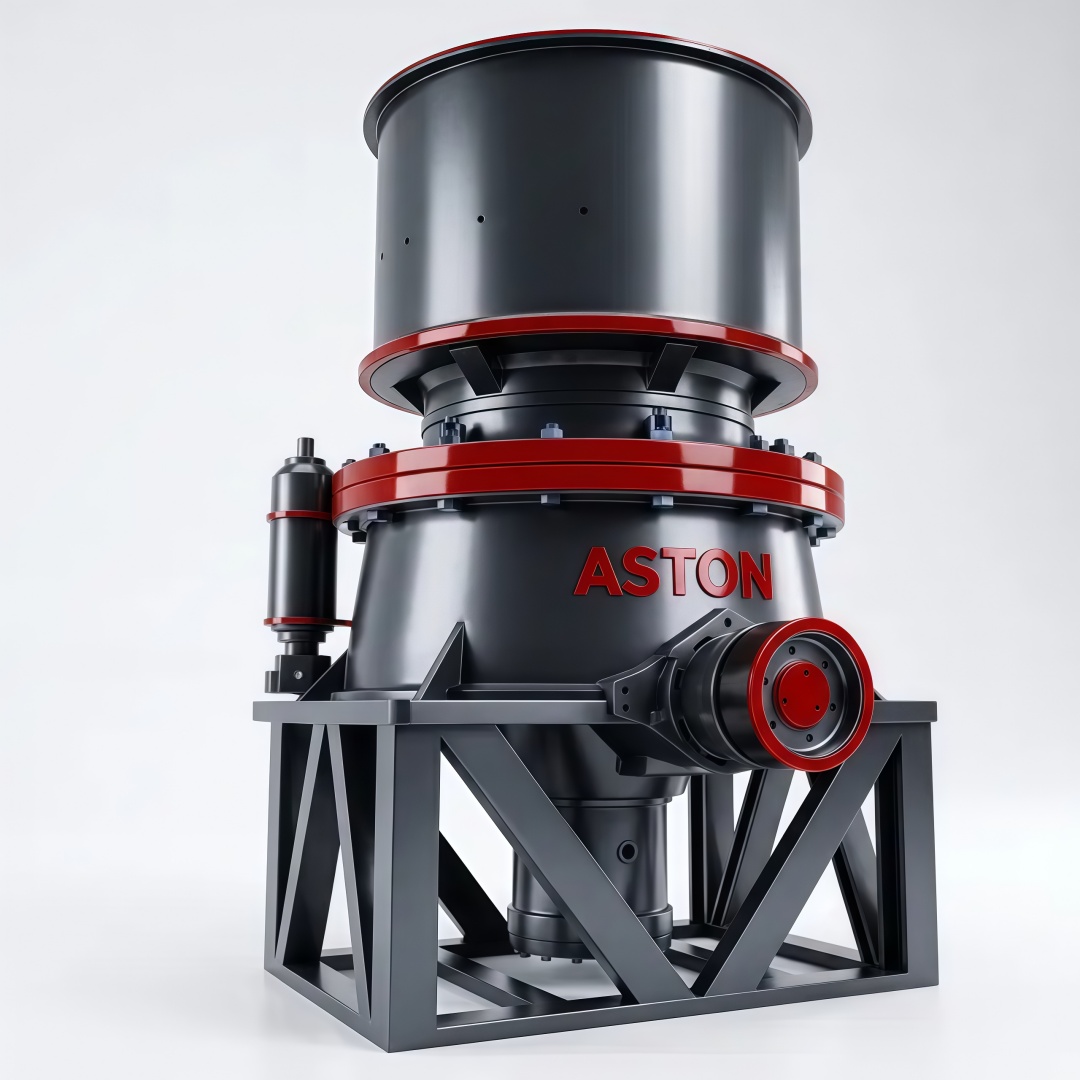
Explore our cone crusher solutions

Stationary cone crusher
HP series / SH series / CS series
Capacity range: 30-1300t/h

Mobile cone crusher
Wheel type / Crawler type
Capacity range: 50-400t/h
Materials processed by cone crusher machine
For secondary & tertiary crushing / hard & abrasive material

Granite

Basalt

Quartz

Andesite

Copper ore

Gold ore

Pebble

Steel slag

Limestone

Concrete blocks

Asphalt pavement

Iron ore
Key benefits of Aston cone crusher for sale
Superior capability for hard and highly abrasive rock processing
Cone crushers are uniquely suited for the secondary and tertiary processing of hard, highly abrasive rocks like granite, basalt, and river pebbles, thanks to a compressive crushing mechanism that effortlessly handles materials with high compressive strengths.
Laminated crushing for premium particle shape
When properly choke-fed, the specialized crushing cavity forces material-on-material compression (laminated crushing) rather than direct wear against the steel liners . This process successfully fractures elongated and flaky particles, delivering continuous grading and consistent cubical aggregate shapes required for high-strength concrete.
Minimized component wear
By utilizing a compressive crushing mechanism instead of high-velocity impact, the equipment experiences significantly lower frictional wear per processed ton, thereby extending the service life of core wear parts—such as mantles and bowl liners—to maximize continuous operational uptime and reduce maintenance-related downtime.
Continuous throughput and large reduction ratios
The synchronous eccentric motion maintains a balanced, constant volumetric material flow through the crushing chamber, which in turn ensures high-capacity throughput and excellent reduction ratios, converting coarse feed into well-graded products in fewer processing passes.
Aston cone crusher for sale
ASTON offers a complete range of cone crusher equipment for secondary and tertiary crushing applications, including stationary cone crushers and mobile cone crushers. Designed for processing medium-hard to hard materials, our cone crushers deliver reliable performance in mining, quarrying, and aggregate production projects.
Stationary cone crusher for sale
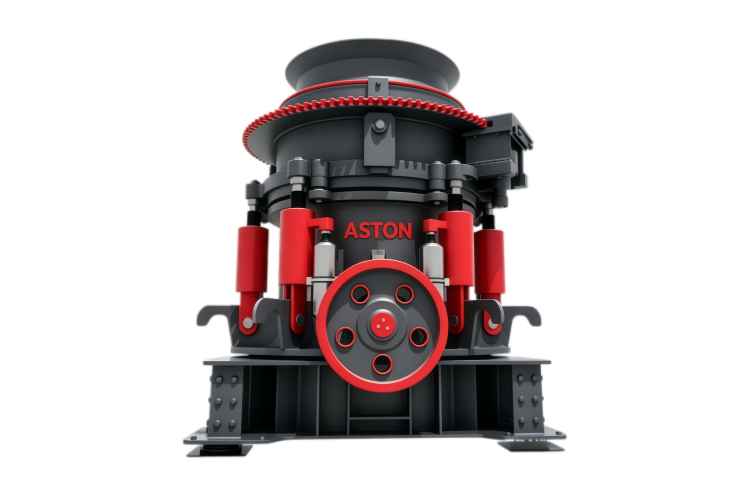
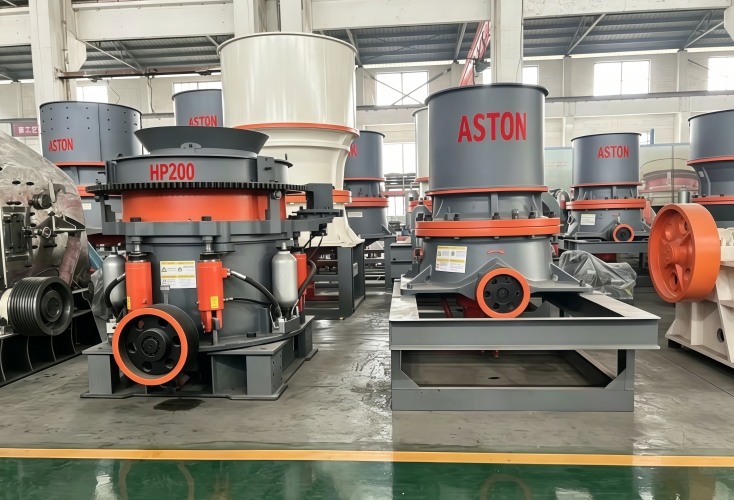
HP multi-cylinder hydraulic cone crusher
Feeding size: 70-450mm
Finished product: 6-38mm
Capacity: 45-1200tph
By combining a fixed main shaft and a rotating eccentric sleeve with the lamination crushing principle, this design ensures an excellent cubical aggregate shape, while incorporating a hydraulic motor for precise CSS adjustment and automated cavity clearing. Consequently, it has become widely used for the secondary and tertiary crushing of hard and medium-hard rock across mining, metallurgy, aggregate production, and construction.
Thanks to this robust capability, the machine handles granite, basalt, river pebble, and iron ore with ease—delivering the high throughput and stable, continuous operation that makes it a preferred choice for large-scale sand-and-gravel plants, highway projects, and hydropower construction.
Specifications of HP series cone crusher
| Model | Cavity type | Feeding size (mm) | Closed side feeding size (mm) | Minimum discharge opening (mm) | Motor power (kw) | Capacity (t/h) |
| HP100 | C1 (Extra coarse) | 175 | 140 | 19 | 4P 100 | 45–140 |
| C2 (Coarse) | 125 | 105 | 13 | |||
| M (Medium) | 100 | 70 | 10 | |||
| F1 (Fine) | 71 | 50 | 9 | |||
| F2 (Extra fine) | 33 | 20 | 6 | |||
| HP200 | C2 (Coarse) | 235 | 190 | 19 | 4P 160 | 90–250 |
| M (Medium) | 171 | 120 | 16 | |||
| F1 (Fine) | 150 | 95 | 13 | |||
| F2 (Extra fine) | 116 | 70 | 8 | |||
| HP300 | C1 (Extra coarse) | 265 | 230 | 25 | 4P 220 | 115–440 |
| C2 (Coarse) | 240 | 210 | 20 | |||
| M (Medium) | 190 | 150 | 15 | |||
| F1 (Fine) | 145 | 105 | 11 | |||
| F2 (Extra fine) | 120 | 80 | 8 | |||
| HP400 | C1 (Extra coarse) | 360 | 290 | 30 | 4P 315 | 140–630 |
| C2 (Coarse) | 310 | 250 | 25 | |||
| M (Medium) | 260 | 196 | 20 | |||
| F1 (Fine) | 182 | 110 | 13 | |||
| F2 (Extra fine) | 135 | 90 | 10 | |||
| HP500 | C1 (Extra coarse) | 370 | 330 | 38 | 4P 400 | 175–790 |
| C2 (Coarse) | 320 | 290 | 28 | |||
| M (Medium) | 245 | 210 | 22 | |||
| F1 (Fine) | 180 | 130 | 13 | |||
| F2 (Extra fine) | 150 | 95 | 10 | |||
| HP800 | C1 (Extra coarse) | 450 | 352 | 38 | 4P 830 | 260–1200 |
| C2 (Coarse) | 373 | 298 | 32 | |||
| M (Medium) | 340 | 275 | 25 | |||
| F1 (Fine) | 280 | 230 | 16 | |||
| F2 (Extra fine) | 235 | 150 | 10 |
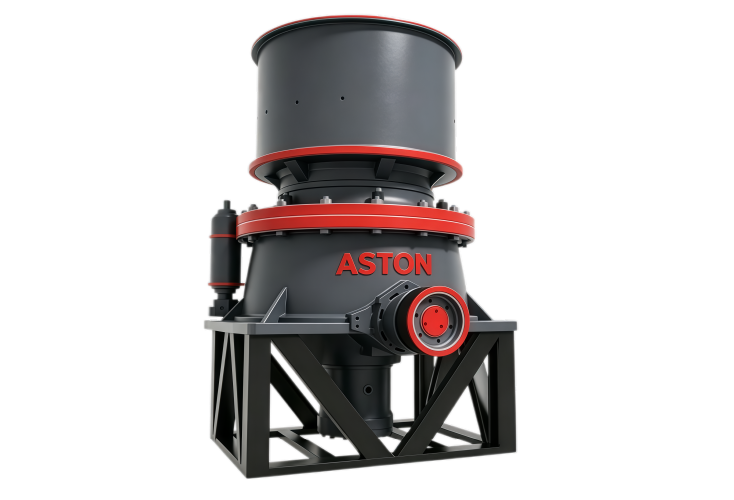
SH single-cylinder hydraulic cone crusher
Feeding size: 38-560mm
Finished product: 4-41mm
Capacity: 27-1050tph
Built with a heavy-duty frame and an extra-large main shaft, this machine integrates an automated system to compensate for liner wear and maintain optimal choke feeding. Thanks to its enlarged feed opening, it is ideally suited for large-scale secondary crushing in mining and aggregate operations, where it excels at processing hard, abrasive feed such as iron ore, copper ore, granite, and basalt.
Consequently, this high capacity makes it a workhorse in metal-ore concentrators, large quarries, and high-output sand-and-gravel lines, where consistent throughput and heavy-duty reliability are essential.
Specifications of SH series cone crusher
| Model | Cavity type | Max feed inlet size (mm) | Min discharge opening (mm) | Capacity (t/h) | Max installed power (kw) |
| SH420 | S1 (Extra coarse) | 240 | 22 | 85–170 | 90 |
| S2 (Medium coarse) | 200 | 19 | 70–130 | ||
| H1 (Fine) | 135 | 10 | 45–130 | ||
| H2 (Medium fine) | 65 | 8 | 35–80 | ||
| H3 (Extra fine) | 38 | 4 | 27–60 | ||
| SH430 | S1 (Extra coarse) | 360 | 25 | 120–345 | 160 |
| S2 (Medium coarse) | 300 | 22 | 105–305 | ||
| S3 (Coarse) | 235 | 19 | 90–275 | ||
| H1 ( Fine) | 185 | 13 | 60–210 | ||
| H2 (Medium fine) | 90 | 10 | 65–165 | ||
| H3 (Extra fine) | 50 | 6 | 48–105 | ||
| SH440 | S1 (Extra coarse) | 450 | 35 | 255–605 | 250 |
| S2 (Medium coarse) | 400 | 29 | 215–515 | ||
| S3 (Coarse) | 300 | 25 | 190–490 | ||
| H1 (Fine) | 215 | 16 | 110–395 | ||
| H2 (Medium fine) | 110 | 13 | 115–340 | ||
| H3 (Extra fine) | 70 | 8 | 90–225 | ||
| SH660 | S1 (Extra coarse) | 560 | 41 | 355–1050 | 315 |
| S2 (Medium coarse) | 500 | 38 | 305–895 | ||
| H1 (Fine) | 275 | 16 | 170–665 | ||
| H2 (Medium fine) | 135 | 16 | 190–505 | ||
| H3 (Extra coarse) | 65 | 13 | 205–320 |
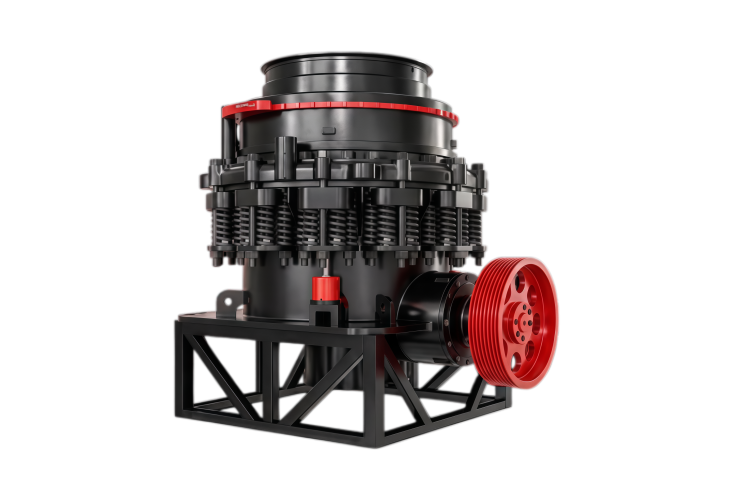
CS compound cone crusher
Feeding size: 83-334mm
Finished product: 9-65mm
Capacity: 45-1270tph
Features a robust, CO2-welded and annealed frame with high-manganese steel components to extend service life, while combining a classic spring overload system for protection with hydraulic cylinders for rapid cavity clearing. As a result, it stands as a versatile choice for the secondary and fine crushing of medium- to high-hardness materials, serving the mining, building-materials, chemical, and metallurgy industries well.
Backed by its proven spring-protection design and durable high-manganese components, this machine reliably crushes limestone, iron ore, granite, and quartz, offering a cost-effective, easy-to-maintain solution for medium-sized quarries and ore-processing plants.
Specifications of CS series cone crusher
| Model | Movable cone diameter (mm) | Cavity type | Shutting size (mm) | Opening size (mm) | Discharging opening size (mm) | Main shaft speed (r/min) | Motor power (kw) | Capacity (t/h) | Overall dimension (mm) | |
| CS75 | 910 | Fine | 83 | 102 | 9-22 | 580 | 75 | 45-91 | 2821×1880×2164 | |
| Coarse | 159 | 175 | 13-38 | 59-163 | ||||||
| CS110 | 1200 | Fine | 127 | 131 | 9-31 | 485 | 110 | 63-188 | 2821×1974×2651 | |
| Medium | 156 | 156 | 13-38 | 100-200 | ||||||
| Coarse | 178 | 191 | 19-51 | 141-308 | ||||||
| CS160 | 1295 | Fine | 109 | 137 | 13-31 | 485 | 160 | 109-181 | 2800×2342×2668 | |
| Medium | 188 | 210 | 16-38 | 132-253 | ||||||
| Coarse | 216 | 241 | 19-51 | 172-349 | ||||||
| CS220 | 1395 | Fine | 155 | 173 | 19-45 | 485 | 220 | 180-285 | 3360×2650×3050 | |
| Medium | 188 | 198 | 22-50 | 215-330 | ||||||
| Coarse | 230 | 245 | 25-65 | 230-570 | ||||||
| CS250 | 1650 | Fine | 188 | 209 | 16-38 | 485 | 250 | 181-327 | 3911×2870×3771 | |
| Medium | 213 | 241 | 22-51 | 220-417 | ||||||
| Coarse | 241 | 268 | 25-64 | 299-635 | ||||||
| CS315 | 2134 | Fine | 253 | 278 | 19-38 | 435 | 315 | 281-726 | 4631×3251×4732 | |
| Medium | 303 | 334 | 25-51 | 608-998 | ||||||
| Coarse | 334 | 369 | 31-64 | 789-1270 | ||||||
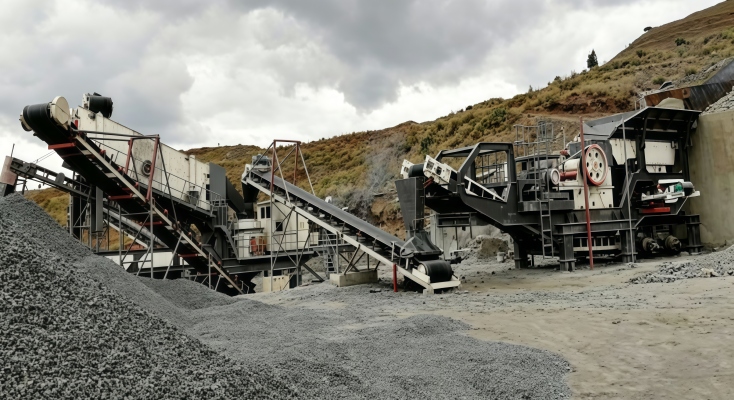
Stationary cone crusher on-site operation:
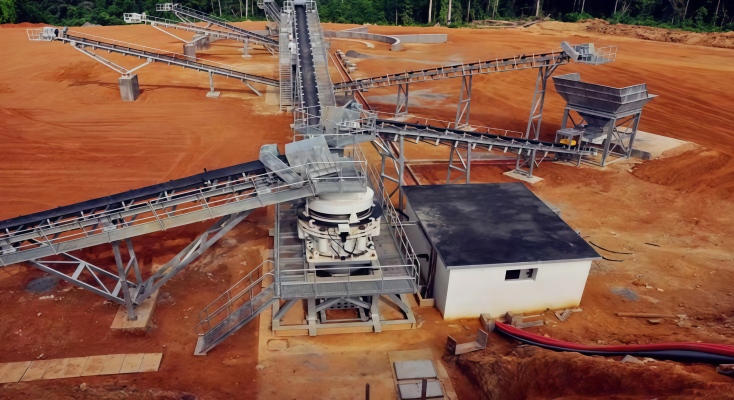
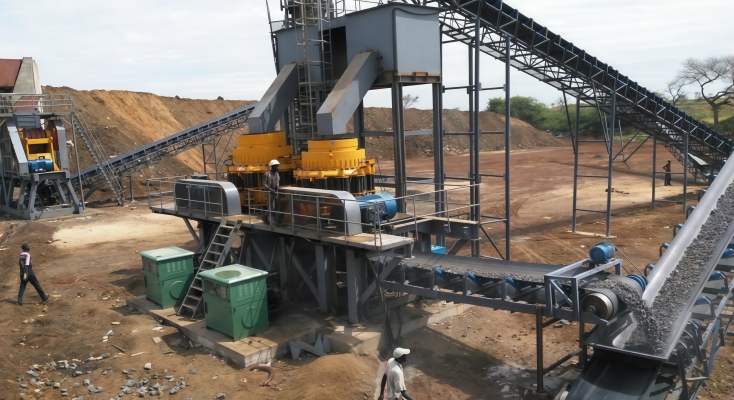
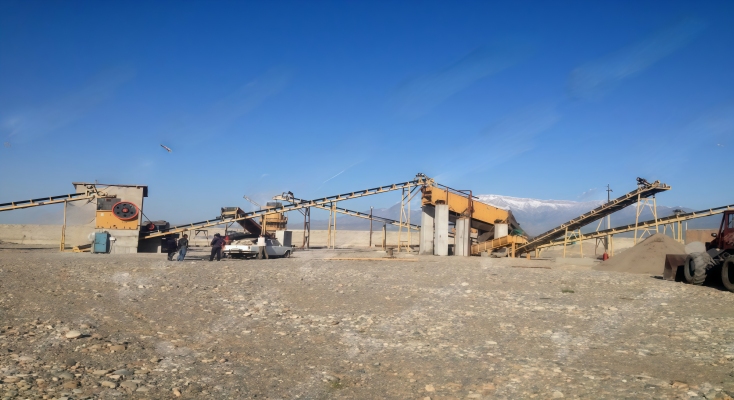
Mobile cone crusher for sale
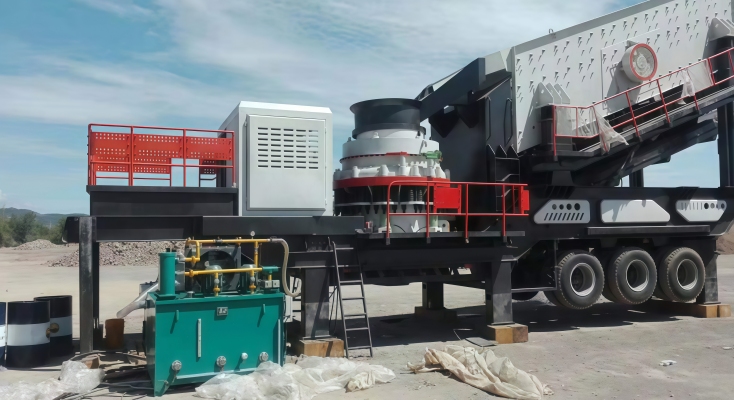
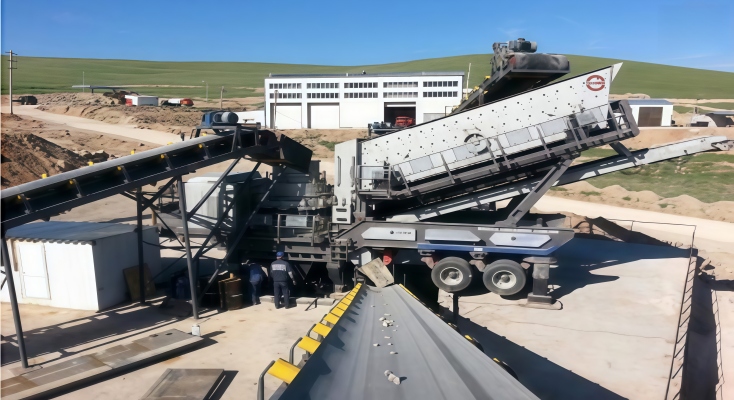
Portable cone mobile crushing plant
Feeding size: 150-260mm
Finished product: 10-20mm
Capacity: 100-500tph
Mounted on a wheeled chassis for rapid highway towing, this plant features a high-efficiency HP multi-cylinder hydraulic cone crusher as its core unit. It is optimized for medium-to-fine rock crushing and integrates seamlessly with primary crushing circuits. This legal highway mobility makes it uniquely ideal for projects that demand frequent relocation—such as highway and railway construction, urban infrastructure, and construction-and-demolition waste recycling.
By allowing contractors to move quickly between multiple job sites, this plant delivers a flexible, highly responsive solution for producing medium-to-fine aggregate where rapid deployment matters most.
Specification of mobile wheel type cone crushers
| Model | K3-HP300-2C | K3-HP400-2C | K3-SH160-2C | K3-CS160-2C |
| Vibrating screen | 3YK2260 | 3YK2260 | 3YK2160 | 3YK2160 |
| HP hydraulic cone crusher | HP300 | HP400 | SH160 | CS160 |
| Conveyor under screen | B1000 | B1000 | B1000 | B800 |
| Capacity (t/h) | 180-300 | 220-380 | 48-345 | 109-349 |
Crawler cone mobile crushing plant
Feeding size: 150-260mm
Finished product: 10-20mm
Capacity: 100-500tph
A fully integrated plant on a hydraulic crawler chassis, capable of moving autonomously and operating directly on complex, rugged terrains. In addition to offering flexible product size adjustment, it significantly minimizes on-site hauling costs. Driven by this self-propelled crawler mobility, it serves as the go-to choice for large open-pit mines, remote quarries, and rugged or sloping terrains with no need for prepared haul roads.
In practice, its ability to crush directly at the working face and tram along as excavation advances perfectly suits demanding mining and large-scale aggregate operations where ground conditions are complex and on-site flexibility is critical.
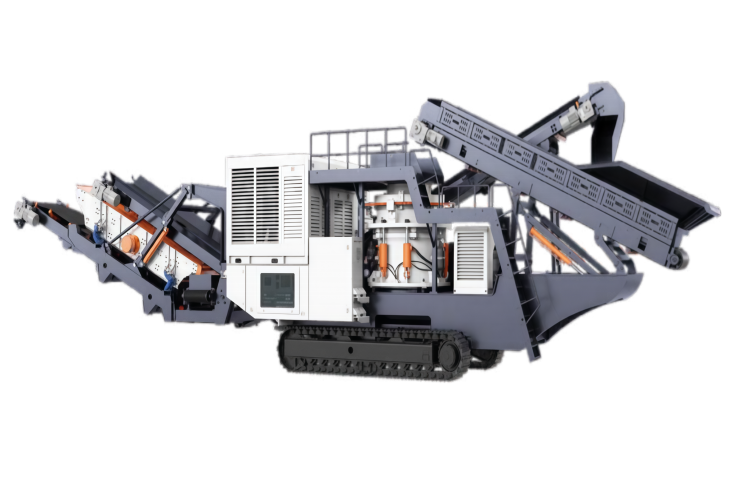
Specification of mobile crawler type cone crusher plant
| Model | Maximum feeding size (mm) | Minimum outlet (mm) | Motor power (kw) | Return screen model | Drive method | Generator (kw) |
| THP200 | 150 | 16 | 160 | YK1500*3800 | Vibration motor 3.7kw*2 | 320 |
| THP300 | 200 | 10 | 220 | YK1600*4000 | Vibration motor 3.7kw*2 | 500 |
| THP400 | 260 | 20 | 280 | YK1500*3800 | Vibration motor 3.7kw*2 | 500 |
Mobile cone crushing plant on-site operation:
Compare stationary and mobile cone crusher
Stationary cone crusher
Mobile cone crusher
Site mobility
Fixed in place and rarely moved once commissioned; requires full dismantling and transport, taking days or weeks.
Wheeled units tow on public roads while crawler units self-propel, allowing relocation and restart within hours.
Production capacity
Runs larger models within a full line, delivering the highest sustained output at the lowest unit cost.
Constrained by chassis size; prioritizes flexibility over peak output.
Terrain adaptability
Requires well-leveled ground; adapts poorly to slopes, soft ground, or changing faces.
Crawler chassis operates on rugged or soft terrain without pre-built haul roads.
Infrastructure & Foundation
Requires concrete foundations, steel support structures, and dedicated conveying systems.
All functional modules are integrated on a single chassis with little to no civil works.
Best for
The stationary cone crusher is generally the better fit if you operate a long-term quarry with a stable, single-location material source, already have (or can build) the supporting foundations and conveyors, and want to maximize throughput at the lowest cost per ton over many years.
A mobile cone crushing plant is generally preferable if your work spans multiple or remote sites, involves construction and demolition recycling, or requires rapid deployment with minimal site preparation—situations where saved haulage and setup time outweigh the higher initial cost.
Compare stationary and mobile cone crushers
Stationary cone crusher
Site mobility
Fixed in place and rarely moved once commissioned; requires full dismantling and transport, taking days or weeks.
Production capacity
Runs larger models within a full line, delivering the highest sustained output at the lowest unit cost.
Terrain adaptability
Requires well-leveled ground; adapts poorly to slopes, soft ground, or changing faces.
Infrastructure & Foundation
Requires concrete foundations, steel support structures, and dedicated conveying systems.
Best for
The stationary cone crusher is generally the better fit if you operate a long-term quarry with a stable, single-location material source, already have (or can build) the supporting foundations and conveyors, and want to maximize throughput at the lowest cost per ton over many years.
Mobile cone crusher
Site mobility
Wheeled units tow on public roads while crawler units self-propel, allowing relocation and restart within hours.
Production capacity
Constrained by chassis size; prioritizes flexibility over peak output.
Terrain adaptability
Crawler chassis operates on rugged or soft terrain without pre-built haul roads.
Infrastructure & Foundation
All functional modules are integrated on a single chassis with little to no civil works.
Best for
A mobile cone crushing plant is generally preferable if your work spans multiple or remote sites, involves construction and demolition recycling, or requires rapid deployment with minimal site preparation—situations where saved haulage and setup time outweigh the higher initial cost.
Wheel-mounted cone crusher plant vs. Crawler cone crusher plant
Wheel type cone crusher
Crawler cone crusher
On-site stability
Requires external stabilizers. Relies on heavy hydraulic or mechanical support legs to establish a rigid foundation on compacted ground, mitigating high-frequency crushing vibrations.
High structural damping. The continuous steel track assembly provides an ultra-low center of gravity and excellent ground friction, absorbing continuous impact loads directly on un-leveled terrain.
Relocation & Transit
Highly transportable. Towed directly on public roads by standard truck tractors; eliminates the requirement for specialized heavy-haul flatbed trailers, lowering long-distance logistics costs.
Requires flatbed transport. Cannot travel on public highways under its own power; requires loading onto a heavy-haul flatbed trailer for transit between different regional projects.
enabling independent movement on slopes up to and soft, muddy surfaces.
Terrain adaptability
Restricted to flat terrain. Confined to leveled, compacted yards; rubber tires are prone to sinking or slipping on loose gravel, mud, or wet clay.
All-terrain capability. Continuous steel tracks distribute weight to achieve an extremely low ground pressure, enabling independent movement on slopes up to 25 ° and soft, muddy surfaces.
Best for
Urban recycling & road projects. Ideal for multi-site contractors frequently moving long distances between flat urban concrete recycling yards and municipal road-building sites.
Mining & advancing quarries. Ideal for open-pit mining or active quarries with frequently advancing faces, steep slopes, or remote canyon hydropower projects with zero road access.
Wheel-mounted cone crusher plant vs. Crawler cone crusher plant
Wheel type cone crusher
On-site stability
Requires external stabilizers. Relies on heavy hydraulic or mechanical support legs to establish a rigid foundation on compacted ground, mitigating high-frequency crushing vibrations.
Relocation & Transit
Highly transportable. Towed directly on public roads by standard truck tractors; eliminates the requirement for specialized heavy-haul flatbed trailers, lowering long-distance logistics costs.
Terrain adaptability
Restricted to flat terrain. Confined to leveled, compacted yards; rubber tires are prone to sinking or slipping on loose gravel, mud, or wet clay.
Best for
Urban recycling & road projects. Ideal for multi-site contractors frequently moving long distances between flat urban concrete recycling yards and municipal road-building sites.
Crawler cone crusher
On-site stability
High structural damping. The continuous steel track assembly provides an ultra-low center of gravity and excellent ground friction, absorbing continuous impact loads directly on un-leveled terrain.
Relocation & Transit
Requires flatbed transport. Cannot travel on public highways under its own power; requires loading onto a heavy-haul flatbed trailer for transit between different regional projects.
enabling independent movement on slopes up to and soft, muddy surfaces.
Terrain adaptability
All-terrain capability. Continuous steel tracks distribute weight to achieve an extremely low ground pressure, enabling independent movement on slopes up to 25 ° and soft, muddy surfaces.
Best for
Mining & advancing quarries. Ideal for open-pit mining or active quarries with frequently advancing faces, steep slopes, or remote canyon hydropower projects with zero road access.
Cone crusher machine features:
- Premium metallurgy & Precision machining: Mantles and bowl liners are cast in Mn18Cr2 manganese alloy and CNC-machined for precise cavity fit, extending wear life by 30%. The 42CrMo forged, quenched-and-tempered main shaft offers superior bending strength, while a copper-alloy bushing in the eccentric sleeve minimizes metal-on-metal friction.
- Advanced heat treatment: Key gears and transmission shafts are carburized, quenched, and tempered for high surface hardness with a tough core, preventing gear shearing and shaft breakage under high-shock loads.
- FEA-optimized frame: The main frame is welded from high-strength steel plates, with critical welds UT-verified for zero internal defects and FEA-optimized to hold structural integrity under continuous heavy-impact loads.
- Optimized chamber geometry: Optimized crushing speed, eccentric stroke, and laminated cavity design raise hourly throughput by 15%–40% at the same motor power.
- Real-time CSS adjustment: A hydraulic motor-driven system enables real-time CSS adjustment under load, with automatic wear compensation for consistent aggregate sizing.
- Positive-pressure air & Dual labyrinth seals: A positive-pressure blower with dual labyrinth seals forms a micro-positive-pressure zone that blocks dust from the drive train, cutting oil contamination to near zero and keeping gear efficiency above 95%.
Price range of our cone crusher equipment for sale
| Capacity range | Estimated price range |
| Standard capacity (100 – 200tph) | $180,000-$260,000 |
| High capacity (200 – 350tph) | $280,000-$420,000 |
| Ultra capacity (350 – 500tph) | $450,000+ |
The prices listed above are for reference only.
In practice, the actual cost of a cone crusher for sale is influenced by multiple technical variables, including the specific equipment model, physical dimensions, material hardness, and optional auxiliary systems.
To obtain a precise quotation tailored to your exact project requirements, we recommend submitting a technical inquiry directly to our engineering team.
| Capacity range | Estimated price range |
| Small-Scale (30 – 100tph) | $35,000-$65,000 |
| Medium-Scale (100 – 300tph) | $70,000-$140,000 |
| Large-Scale (300 – 600tph) | $150,000-$280,000 |
| Heavy-Duty (> 600tph) | $300,000+ |
The prices listed above are for reference only.
In practice, the actual cost of a mobile crushing plant is influenced by multiple technical variables, including the specific equipment model, physical dimensions, material hardness, and optional auxiliary systems.
To obtain a precise quotation tailored to your exact project requirements, we recommend submitting a technical inquiry directly to our engineering team.
Types of cone crusher for sale
To find the right cone crusher, it helps to understand how they are classified. Generally, they are grouped in two ways: by how they operate mechanically (their mechanism), and by where they are placed in the production line (their crushing stage).
Classification by mechanism
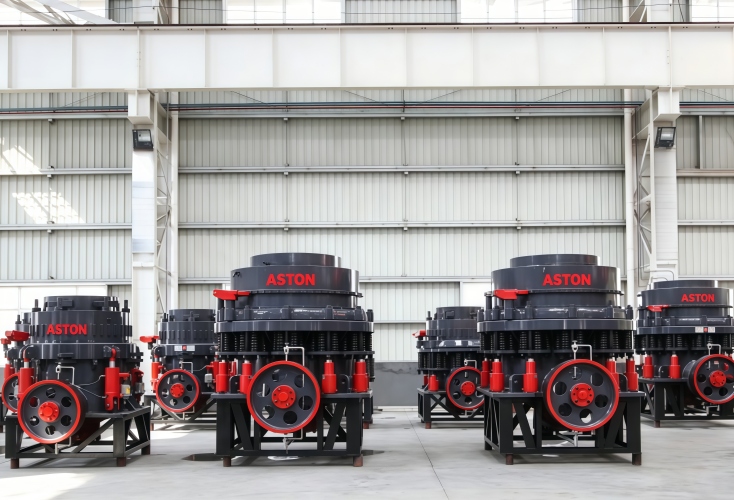
1. Spring & Symons cone crusher
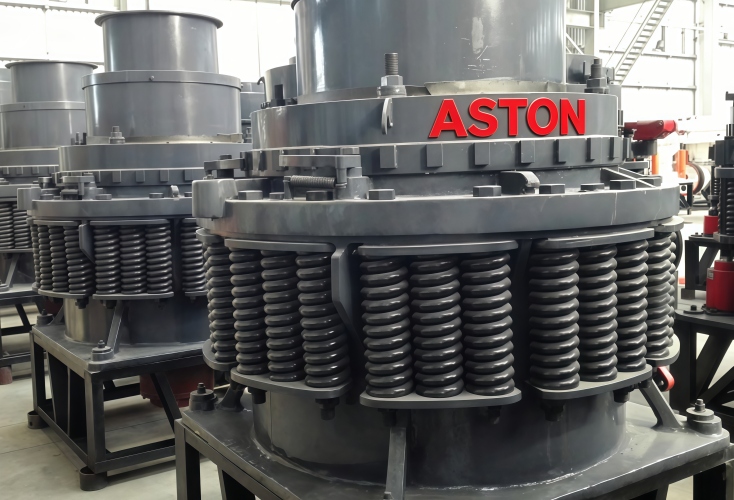
The spring cone crusher, widely known by the Symons name, is the earliest broadly adopted cone crusher and still a benchmark for later designs, relying on a remarkably simple principle: a bank of heavy-duty springs provides purely mechanical overload protection, allowing the machine to safeguard itself without any hydraulic system.
Structural features: A ring of heavy-duty springs around the frame acts as overload protection—when uncrushable tramp iron enters the chamber, the springs compress to let the bowl lift and release it, then return to the set position. Meanwhile, the Closed Side Setting (CSS) is adjusted mechanically. Ultimately, this combination delivers a proven, purely mechanical structure with no dedicated hydraulic system.
Core advantages: This classic design delivers a low purchase cost, robust mechanical durability, and simple, low-barrier maintenance. Furthermore, since spare parts and repair skills are widely available worldwide, users enjoy minimal dependence on specialized hydraulic support.
Applicable scenarios: Small-to-medium quarries, aggregate lines with limited budgets, and regions where mechanical servicing is more practical than hydraulic support—where reliability and low cost matter more than fine adjustment or automation.
2. Compound cone crusher
The compound cone crusher, often regarded as an advanced evolution of traditional designs, bridges classic mechanical reliability with modern hydraulic utility. Its core concept introduces strategic hydraulic components into a heavy-duty spring platform to improve maintenance efficiency.
Structural Features: This equipment utilizes a dual-system architecture. It retains a heavy-duty mechanical spring assembly around the main frame for continuous overload protection while integrating specialized hydraulic cylinders into the locking and clearing mechanisms—thereby using the mechanical springs for uninterrupted operational safety and reserving the hydraulic system strictly for automated structural adjustments.
Core advantages: Striking an ideal balance between cost and performance, this architecture leverages an integrated hydraulic clearing system to sharply cut downtime caused by chamber blockages. Compared with purely mechanical models, this advancement effectively eliminates labor-intensive manual extraction.
Applicable scenarios: Medium-sized quarries and ore-processing plants seeking faster fault recovery and higher machine availability, where operators require a practical maintenance setup without the higher procurement costs of a full hydraulic machine.
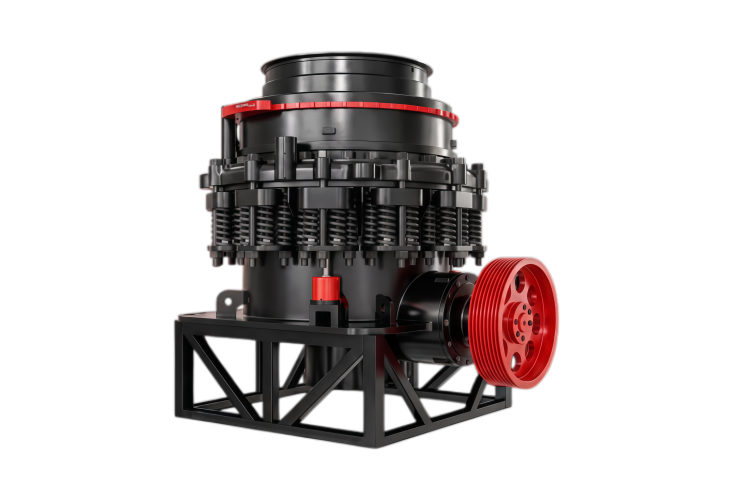
3. Single-cylinder hydraulic cone crusher
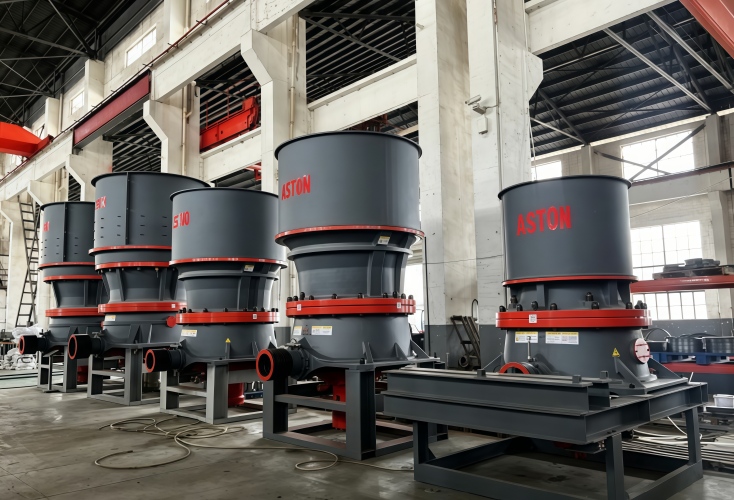
The single-cylinder hydraulic cone crusher represents a highly integrated modern design focused on high efficiency and automated control. Specifically, its core concept relies on a single bottom hydraulic cylinder to perform multiple operational functions, minimizing mechanical moving parts.
Structural features: This equipment boasts a streamlined architecture featuring a single hydraulic cylinder positioned at the base of the machine, which supports the main shaft and directly regulates the vertical movement of the crushing cone. To maximize this operational efficiency, the hardware is seamlessly paired with an integrated electronic control system for real-time monitoring.
Core advantages: By consolidating discharge opening adjustment (CSS), overload protection, and cavity clearing into a single automated system, this single-cylinder design achieves high operational efficiency and simplified maintenance—while significantly reducing components and lowering long-term wear costs.
Applicable scenarios: Large-scale aggregate plants, mining operations, and automated production lines requiring precise product size control and continuous high-throughput performance, where operators prioritize maximum automation and fine adjustment capabilities.
4. Multi-cylinder hydraulic cone crusher
The multi-cylinder hydraulic cone crusher is a high-performance modern machine designed for high-density crushing and strict cubical product requirements. Its core concept relies on multiple hydraulic cylinders distributed around the periphery of the frame to deliver immense, constant crushing forces and comprehensive automation.
Structural features: This model is engineered around a robust, multi-cylinder perimeter architecture featuring several heavy-duty hydraulic cylinders mounted around the outer frame. At its core, this structural framework works in tandem with a fixed main shaft supported by a spherical bearing, allowing the eccentric sleeve to drive the moving cone directly at high speeds.
Core advantages: By pairing synchronized hydraulic clamping, precise tramp release, and automated clearing with the laminating crushing principle, this multi-cylinder architecture achieves exceptional crushing force and superior grain shape—thereby maximizing the yield of high-quality, cubical finished products.
Applicable scenarios: Large-to-mega scale mining operations and high-standard aggregate production lines handling extremely hard, abrasive materials (e.g., iron ore, quartz, basalt), where operators demand maximum yield, fine flake minimization, and continuous heavy-duty processing.
Classification by crushing stage
1. Standard type cone crusher
The standard type cone crusher is a specialized configuration designed primarily for secondary crushing stages within a reduction circuit. Its core concept relies on a steeper cavity profile to handle larger feed sizes and deliver steady, intermediate material reduction.
Structural features: Characterized by a steeply inclined crushing chamber and a relatively short parallel zone at the discharge end. This architectural geometry allows the machine to accommodate larger run-of-mine aggregates or blasted rock at the intake.
Core advantages: High throughput for primary-stage discharges and optimized secondary reduction; the open cavity design ensures continuous material flow without bridging, preparing a well-conditioned feed for subsequent fine crushing stages.
Applicable scenarios: Intermediate or secondary crushing circuits in aggregate plants and mining operations, where operators need to process bulk coarse feed from a primary jaw crusher before it enters tertiary or fine reduction units.
2. Short-Head & Fine cone crusher
The short-head or fine cone crusher is a specialized machine designed specifically for tertiary and quaternary crushing stages. Its core concept relies on a shallow cavity design to maximize material inter-particle crushing and produce high-quality, finely sized end products.
Structural features: Characterized by a much flatter crushing chamber angle and a significantly longer parallel zone at the discharge setting. This narrow gap geometry restricts material movement, forcing the particles to undergo multiple compression cycles before exiting.
Core advantages: Superior reduction ratios and excellent cubical product shape; the long parallel zone ensures strict control over top-size particles, while the advanced cavity design promotes laminating crushing to minimize elongated or flaky materials.
Applicable scenarios: Final-stage crushing circuits in aggregate plants, mining operations, and manufactured sand (M-sand) production lines, where operators require precise sizing, fine sand fractions, and strict shape specifications for high-strength concrete or asphalt.
Want to talk? Reach out to our experts
Cost breakdown of cone crusher
When evaluating the total cost of a cone crusher, the initial purchase price tells only part of the story. Long-term operational expenses often account for a significant portion of the total lifecycle cost.
Operational expenses table
| Expense category | Standalone cone crusher | Mobile cone crusher plant |
| Wear parts replacement | $0.15 – $0.40 per ton (High frequency for mantles and concaves when crushing hard rock.) | $0.20 – $0.50 per ton (Same as standalone, plus conveyor belt and screen mesh replacements.) |
| Civil & Installation cost | $10,000 – $45,000 (one-time) (High initial expense for concrete foundations and steel support frames.) | < $2,000 |
| Power & Fuel consumption | $0.10 – $0.25 per ton (Relies purely on the local electrical grid; delivers highly stable operating costs.) | $0.25 – $0.60 per ton (Driven by onboard diesel generators or direct dual-power electric grid access.) |
| Site relocation / Transfer | $5,000 – $20,000 (one-time) (Requires dismantling, transport, and rebuilding foundations.) | < $500 (one-time) (The plant moves autonomously via tracks or standard truck towing.) |
| Annual overview (Medium-Scale) | $100,000 – $260,000 | $180,000 – $440,000 |
| Annual Overview (Large-Scale) | $250,000 – $650,000 | $450,000 – $1,100,000 |
Estimated payback periods
Standalone cone crusher: 2–4 years
Standalone cone crusher has a lower upfront cost, which makes it well suited to fixed, high-volume sites such as large quarries. Under stable, high utilization, it typically pays back within 2–4 years. Its return depends largely on sustained uptime—the more material processed at a single location, the shorter the payback.
Mobile cone crusher plant: 2–5 years
Mobile plant has a higher initial cost due to its integrated chassis and hydraulic system, but it can achieve a comparable payback of 2–5 years by reducing material haulage. On-site crushing lowers transport expenses, requires no foundation, and can be deployed within days—factors that are particularly relevant for operations spanning multiple or remote sites.
Versatile applications for cone crushers
From secondary and tertiary crushing of hard rock in aggregate production to fine reduction of ores in mining operations, ASTON cone crusher machine deliver dependable performance where precision and capacity matter most. Engineered to handle high-hardness, abrasive materials, they refine pre-crushed feed into well-shaped, uniformly graded product.
With optimized chamber geometry and reliable crushing force, ASTON cone crusher equipment keep throughput high and final aggregate consistent—making them a trusted choice for quarrying, mining, and demanding construction applications alike.
Typical application areas
Metal mining & ore processing:
Secondary and tertiary crushing of high-hardness ores such as iron, copper, gold, and zinc, preparing uniform feed for grinding and beneficiation.
Hard rock aggregate production:
Fine crushing and shaping of granite, basalt, and river pebble into high-quality, cubical aggregates for concrete and asphalt.
Sand making & shaping lines:
Serving as the intermediate stage before sand makers, reducing oversized material and improving particle shape to boost overall line efficiency.
Construction & infrastructure projects:
Reduction of limestone, river stone, and hard rock into precise, spec-compliant material for road, bridge, and urban infrastructure.
Explore industrial applications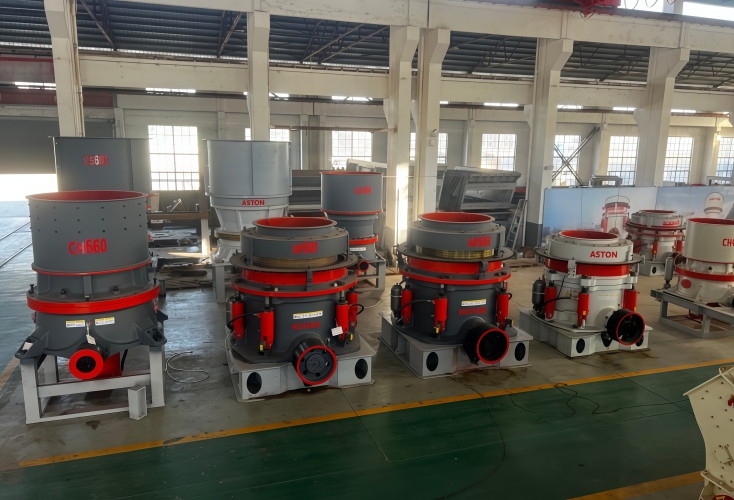
Cone crusher main components
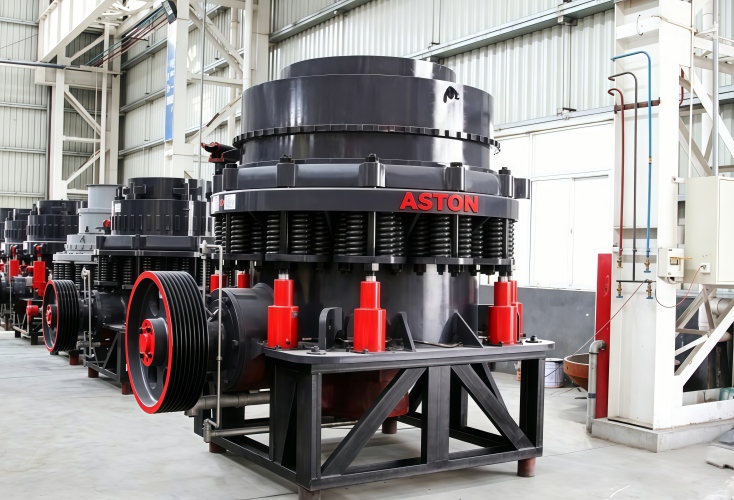
ASTON cone crushers are engineered with a sophisticated hydraulic system and a high-performance crushing cavity. Each key component is precision-machined to deliver excellent cubical product shape and high throughput, while ensuring maximum reliability in demanding secondary and tertiary reduction applications.
Formed by a high-manganese steel mantle (the movable cone) and bowl liner (the fixed cone), this optimized cavity ensures uniform laminated crushing and reduces specific wear costs. The chamber geometry directly governs product shape and gradation, producing a consistent, cubical aggregate.
While the protective assembly instantly shields internal components from mechanical overload by clearing tramp iron, the integration of modern hydraulics takes operational convenience further—allowing for rapid cavity clearing and effortless CSS adjustment.
Equipped with a variable-frequency drive (VFD) and a heavy-duty hopper, the feeding unit regulates material flow continuously and evenly into the crushing chamber. Steady, choke-fed delivery keeps the cavity consistently full for maximum throughput and even liner wear.
Utilizing a multi-deck vibrating screen, the screening system classifies crushed material into precise aggregate sizes while returning oversized rocks to the chamber via a closed-loop recirculating conveyor. This closed-circuit design guarantees a consistent, on-spec final gradation.
High-tensile belt conveyors continuously transport graded aggregates to designated stockpiles, linking the crushing, screening, and stockpiling stages into one uninterrupted flow. Their robust construction supports high volumes with minimal downtime.
What materials can our cone crusher process?
ASTON cone crusher machine are engineered for secondary and tertiary crushing of hard, abrasive, and high-strength materials. Whether installed as a stationary unit or integrated into a mobile crushing system, our cone crushers deliver stable output, precise sizing, and superior particle shape across a wide range of industries.
1. Hard & abrasive rocks
With optimized chamber geometry and wear-resistant manganese liners, ASTON cone crushers efficiently handle the ultra-hard, high-silica rock that quickly wears other crusher types:
- Granite, Basalt, Quartz, Diabase, Andesite, and Porphyry.
These abrasive materials demand strong crushing force and durable wear parts, making cone crushers the preferred choice for secondary reduction and shaping.
2. Metallic ores
ASTON cone crusher equipment are widely used in mineral processing for the intermediate and fine reduction of hard metallic ores before grinding and beneficiation:
- Iron Ore, Copper Ore, Gold Ore, Lead-Zinc Ore, Nickel Ore
The high crushing force and laminated action ensure uniform feed size, boosting the efficiency of downstream grinding.
3. River stone & pebbles
Naturally hard and highly abrasive, river stone is the signature material for cone crushers, which produce premium cubical aggregate for concrete and high-quality sand-making lines:
- River Pebble, Cobblestone, and Gravel.
Their laminated crushing produces premium cubical aggregate, making them ideal for concrete and high-quality sand-making lines.
4. Metallurgical slag
Extremely hard and highly abrasive, slag is a material few crushers can process economically, but ASTON cone crushers handle it with ease, including:
- Steel Slag, Copper Slag, and Ferroalloy Slag.
The robust crushing action and wear-resistant design crush and shape slag for recycling into aggregate or metal recovery.
5. Hard non-ferrous & alloy ores
For dense, high-value ores requiring precise, controlled reduction, ASTON cone crushers deliver consistent results, including:
- Bauxite, Chromite, Molybdenum Ore, and Tin Ore
The laminated crushing principle ensures uniform sizing with minimal fines, protecting valuable mineral content.
Not sure if your material is suitable? Contact us with your feed size and capacity requirements for a tailored recommendation.
Want to talk? Reach out to our experts
The critical role of cone crushers in secondary crushing
In any aggregate line, the stages that follow primary crushing largely determine the quality and value of the final product. A primary jaw is built to swallow massive run-of-mine boulders, but the coarse, irregular chunks it produces are still a long way from anything a customer will pay top dollar for. The cone crusher is the machine that closes that gap. Acting as the high-capacity engine at the heart of the plant, it pairs a large reduction ratio with the lamination crushing principle to convert oversized feed into the uniform, cubical aggregate that every screening and shaping stage downstream depends on.
Where cone crushers sit in the crushing circuit
Primary (Jaw)
Reduces rom (run-of-mine) material from 800 mm to 150 mm.
Secondary (Cone/Impact)
Reduces material to manageable aggregate sizes (20–40 mm).
Screening (separation)
5–25 mm
Tertiary (VSI Finishing)
The “polishing” phase where material is shaped into 0–5 mm sand or cubical 10–20 mm stone.
Three things only a cone crusher does well at the secondary stage
- Large reduction ratio with sustained high capacity: A jaw crusher can only open its gap so far, and impact machines wear out quickly on hard stone. The cone crusher’s gyrating mantle applies continuous, powerful compression at high throughput, holding a large reduction ratio hour after hour. This lets it shoulder the bulk of the size-reduction workload in the middle of the line, keeping the entire circuit fed and balanced instead of becoming a bottleneck.
- Cubical shape through inter-particle lamination crushing: Machines that break rock one piece at a time tend to leave slivery, needle-like fragments behind. The cone crusher instead runs choke-fed, so stones grind and fracture against one another (the lamination principle). This inter-particle action targets weak, over-long grains and breaks them along their natural planes, yielding a rounded, well-proportioned product that satisfies the strict workability requirements of structural concrete and high-grade asphalt—material that sells at a clear premium.
- On-demand size control with hydraulic CSS adjustment: A large share of your final gradation is decided inside the crushing chamber long before material ever reaches a screen. A modern cone crusher lets operators dial in the Closed Side Setting (CSS) hydraulically—frequently while the machine keeps running—and automatically corrects for liner wear so that setting stays true. As a result, the crusher adapts on the fly to shifting feed or market demand and hits tight gradation targets repeatedly, sharply cutting the endless re-screening and manual tinkering that rival machines force on you.
When a modern hydraulic cone crusher replaces a spring cone circuit
For hard-rock producers running an older spring (symons) cone setup, upgrading the secondary stage to a modern hydraulic cone crusher is a proven modernization lever—delivering the same output with less downtime and tighter product control.
| Performance metric | Spring cone crusher | Hydraulic cone crusher |
|---|---|---|
| Cavity clearing | Manual disassembly on blockage | Automatic hydraulic release |
| Product shape | Cubical, but more variation | Consistent cubical via lamination |
| Downtime | Higher (manual maintenance) | Lower (automated protection) |
For a 400,000 t/year hard-rock plant, upgrading from a spring cone to a modern hydraulic cone crusher at the secondary stage typically raises effective uptime by 5–10% and reduces labor and maintenance cost by usd 0.20–0.50 per ton, thanks to hydraulic automation and more consistent product quality.
Where cone crushers don’t belong
An honest answer from a factory perspective: do not buy a cone crusher if your project falls into these categories:
- Primary crushing of oversized feed: A cone crusher cannot swallow run-of-mine boulders; feeding oversized rock will bridge the cavity and stall the machine—a jaw crusher belongs here.
- Soft, low-abrasion material where shape doesn’t matter: If you are only crushing soft limestone for road base, an impact crusher is cheaper and offers a higher reduction ratio.
- Wet, sticky or high-clay feed: Material with high moisture or heavy clay will pack and clog the crushing chamber, causing frequent blockages and significant downtime.
If reliable output and consistent, cubical aggregate are what your operation depends on, the cone crusher is one of the most consequential choices you will make for your circuit. Sitting at the heart of secondary and tertiary crushing, it does the heavy lifting that everything downstream relies on—and when it is correctly sized and set, it pays for itself quickly by turning coarse, low-value feed into the high-spec, market-ready product your best contracts demand.
Working process of cone crusher crushing line
A cone crusher-based crushing line follows a refined and highly efficient workflow built around secondary and tertiary crushing. As the key stage that shapes the final product, the cone crusher plays a decisive role in reducing pre-crushed material to precise sizes, using the lamination crushing principle to ensure a consistent, cubical shape, stable production, and reliable on-spec output.
Pre-crushed material first enters the line through a vibrating feeder or surge hopper, then is regulated by a variable-frequency drive to flow continuously and evenly into the crushing chamber. Steady choke feeding keeps the cavity consistently full, which stabilizes throughput, evens out liner wear, and prevents the shape inconsistencies caused by surging or starved feed.
Driven by the eccentric bushing, the mantle gyrates against the fixed bowl liner, repeatedly narrowing and widening the gap to apply continuous compressive force. As the gap closes, particles are forced to crush against one another (the lamination principle), effectively fracturing elongated and flaky stones to deliver a highly consistent, cubical product shape.
Once material is reduced below the Closed Side Setting (CSS), it falls from the bottom of the chamber and is fed onto a multi-deck vibrating screen. The screen classifies it into several precise, on-spec product sizes—on-spec material moves on to the next stage, while oversized fragments are separated out for further handling.
Oversized material separated by the screen is automatically returned to the crushing chamber via a closed-loop recirculating conveyor, forming a continuous closed circuit. This closed-loop design both guarantees a consistent, on-spec final gradation and maximizes material utilization while minimizing waste.
Finished aggregates of each grade are carried continuously by high-tensile belt conveyors to designated stockpiles or silos, stored separately by product type. In this way the entire line achieves uninterrupted operation from feed to finished product, ensuring efficient and stable output.
Tips for you to get a lower price on a cone crusher equipment without sacrificing quality
A lower price does not have to mean lower quality—it often comes from smarter procurement decisions rather than cheaper components. The following tips focus on where genuine savings exist, and how to secure them while protecting the integrity of the machine.
Selecting the standard crushing cavity
Selecting a standard crushing cavity configuration over a highly customized design ensures long-term part interchangeability and lower manufacturing premiums. This choice also drastically shortens delivery lead times and simplifies future wear-part sourcing.
Prioritize in-stock machine configurations
Selecting established, in-stock machine models over custom made-to-order production mitigates exposure to currency fluctuation risks during manufacturing. It also eliminates lengthy wait times, avoiding the costly opportunity expense of delayed onsite production.
Schedule procurements during off-peak seasons
Placing equipment orders during the manufacturer’s off-peak seasons (typically Q1 or Q4) provides buyers with stronger negotiation leverage. During these periods, factories have excess capacity and are more receptive to adjusting margins to secure backlogs.
Secure long-term wear-part contracts
Negotiating a comprehensive wear-part framework agreement during the initial machinery purchase secures locked-in prices for future mantles and liners. This early contractual commitment significantly lowers the overall lifecycle operating costs of the plant.
Avoid over-specifying equipment configurations
Equipment configurations should be strictly engineered to match actual, verifiable site conditions rather than hypothetical, unneeded capabilities. Avoiding unnecessary automation upgrades or oversized auxiliary systems prevents wasting capital on redundant features that do not contribute to daily throughput.
4 essential checks before selecting a regional cone crusher distributor
Demand official factory authorization letters
Request a valid, factory-issued distributor certificate to verify the supplier’s legitimate status and ensure the equipment is not a grey-market import. This official authorization guarantees that your operations will have direct access to manufacturer software updates, technical recalls, and legitimate warranty claim channels.
Inspect local spare parts inventory personally
Perform a physical or video audit of the distributor’s local warehouse to verify their real-time stock levels of critical wear parts like mantles, bowl liners, and bronze bushings. This due diligence ensures you avoid empty-shell brokers who carry zero inventory and rely entirely on lengthy factory-direct drop shipments during unplanned downtime.
Evaluate in-house technical support and SLAs
Review whether the distributor employs full-time, factory-trained service engineers capable of managing complex mechanical and hydraulic troubleshooting on-site. You must demand a legally binding Service Level Agreement (SLA) that guarantees prompt technician arrival—such as within 24 hours of an emergency shutdown—to minimize production losses.
Review customs clearance capabilities and financial flexibility
Confirm the distributor’s ability to manage Out-of-Gauge (OOG) heavy shipping and deliver a turnkey, Delivered Duty Paid (DDP) customs clearance solution. A mature regional partner should also offer localized currency billing and flexible payment terms to mitigate your international transaction tax and cash flow risks.
Safe operating guidelines for cone crushers
Operating a cone crusher machine requires strict adherence to safety standards to mitigate risks associated with high-pressure mechanical force. Following these industry-standard protocols ensures both personnel safety and equipment longevity.
Mandatory lockout-tagout (LOTO) procedures
Prior to any inspection or maintenance, ensure complete mechanical and electrical isolation. All energy sources must be locked and tagged to prevent accidental re-energization.
Chamber clearance & Pre-start alarms
Verify the crushing chamber is free of tramp iron or residual material. Always initiate an audible start-up alarm to alert all site personnel before engaging the motor.
Industrial-grade PPE compliance
Operators must wear certified high-decibel hearing protection and N95-rated masks to mitigate risks from intense noise and airborne silica dust.
E-stop accessibility & Testing
Ensure all Emergency Stop buttons are unobstructed, clearly marked, and functionally tested at the start of every shift.
Key factors to achieve high-capacity output and maximize cone crusher machine efficiency
Achieving peak throughput isn’t just about running the motor at full speed, it’s about optimizing the crushing environment inside the chamber. By fine-tuning these operational variables, you can significantly increase tons-per-hour (TPH) while lowering energy consumption per ton.
Maintain a constant choke-fed level
Operating the cone crusher under a continuous, choke-fed state is essential to activate the inter-particle laminated crushing mechanism. This constant material level maximizes volumetric throughput and ensures a superior cubical aggregate shape.
Optimize feed size gradation
The raw feed must consist of well-graded particle sizes rather than single-sized rocks to form a dense crushing bed. This optimal distribution prevents excessive void spaces in the cavity, improving reduction efficiency and protecting manganese liners.
Ensure symmetrical material distribution
Feedstock must be distributed evenly across the entire 360-degree circumference of the crushing chamber. Asymmetrical, one-sided feeding leads to localized wear on the mantle and initiates severe structural tilting forces that damage internal eccentric bearings.
Compensate for liner wear systematically
Regularly monitoring liner wear profiles and adjusting the Closed Side Setting (CSS) is critical to maintaining consistent aggregate sizing. Timely adjustments compensate for manganese wear, preventing final product quality drift and safeguarding overall throughput.
Minimize circulating loads
High-efficiency screening before the secondary or tertiary stages must remove qualified fine aggregates to prevent them from re-entering the crushing chamber. Lowering this recirculating load reduces unnecessary power consumption and prevents material packing inside the cavity.
Wear parts life cycle & Maintenance savings
Component lifespans by material hardness
Under standard operating conditions, estimated crusher liner (mantle & concave) lifespans are heavily dictated by feedstock abrasiveness:
| Material | Wear parts life cycle |
| Limestone (medium hardness) | 1,500 to 3,000+ operating hours |
| Granite (high hardness) | 600 to 1,200 operating hours |
| Basalt (highly abrasive) | 300 to 800 operating hours |
Accelerating factors: non-choke feeding, uneven material distribution (eccentric loading), and tramp metal entry.
Engineering maintenance recommendations
- Lubrication and oil management: Monitor lubricant temperature, system pressure, and filtration elements regularly to extend the operational life of internal bronze bushings and eccentric sleeves.
- Feed quality control: Deploy self-cleaning magnetic separator to eliminate tramp metal and maintain uniform feedstock sizing to prevent eccentric loading and localized chamber wear.
- Scheduled inspection & Sizing adjustments: Inspect liner wear profiles systematically and adjust the Closed Side Setting (CSS) timely to maintain continuous product quality and ensure secure fastening.
Common problems and how to fix them
In continuous crushing operations, timely diagnostic evaluation and preventive action are critical to minimizing unscheduled downtime. Below are the four most common operational failures, along with correct solutions:
Overload shutdown / Tramp iron tripping
Root cause: Entry of non-crushable foreign objects (e.g., tramp metal) into the crushing chamber, or volumetric packing of the cavity caused by a feeding rate exceeding the plant’s capacity limit.
Solution: Clear the chamber using the hydraulic relief system to discharge the blockage; adjust the feeder VFD settings to maintain a controlled, uniform volumetric feed rate.
Product sizing coarsening
Root cause: Excessive wear on the manganese liners (mantle/bowl liner), or mechanical loosening/improper adjustment of the Closed Side Setting (CSS) gap.
Solution: Adjust the Closed Side Setting (CSS) using the hydraulic shim or mechanical screw adjustment system; replace worn mantles and liners immediately if they exceed specified wear thresholds.
Abnormal equipment vibration
Root cause: Mechanical unbalance in the eccentric shaft assembly or heavy rotor, loose structural/foundation bolts, or severely uneven material distribution across the crushing chamber.
Solution: Inspect and re-balance all rotating components; check and retorque all chassis and foundation structural bolts; optimize the feeder arrangement to guarantee uniform, choke-fed material distribution.
Excessive oil temperature
Root cause: Insufficient lubrication oil volume, severe blockage in the oil filtration elements, or high frictional heat caused by bearing wear and long-term overloading.
Solution: Top up the lubricant reservoir to the specified level and replace clogged filter elements; inspect heavy-duty bearings for wear; ensure the heat exchanger/oil cooler system is fully functional and free of obstructions.
Market outlook for cone crusher equipment
Current market landscape and growth drivers
The global cone crusher market was valued at approximately USD 2.14 billion in 2026 and is projected to expand at a compound annual growth rate (CAGR) of 5.7% through 2033. This consistent trajectory is supported by expanding infrastructure pipelines—including highways, railways, and airports—demanding large volumes of high-specification concrete aggregates.
Beyond traditional aggregate processing, expanding mining activities for precious and base metals are driving first-time procurement of high-capacity crushing units. Additionally, the growing global mandate to recycle demolition concrete as a sustainable alternative to virgin aggregate further accelerates the adoption of advanced cone crushers.
Future technical and market trends
Digitization and Predictive Maintenance: Future technical development centers on the integration of advanced internet-of-things (IoT) sensors, automated CSS compensation systems, and remote predictive maintenance platforms. These connected crushing systems allow operators to analyze real-time wear data and optimize throughput without unplanned downtime, shifting the industry from reactive servicing to proactive fleet management.
Electrification and Decarbonization: Under strict environmental regulations and fuel cost volatility, the market is rapidly migrating from traditional diesel-hydraulic configurations to grid-tied electric and dual-power hybrid mobile systems. This technological shift ensures compliance with municipal carbon emission codes while offering up to 50% energy cost savings on grid power.
Engineered to maximize your profitability
85%+
Optimized chamber geometry and inter-particle crushing deliver over 85% cubical aggregate in a single pass. This high yield reduces recirculating loads and maximizes premium product output for high-grade asphalt and concrete.
2,000+ hrs
Heavy-duty high-manganese mantles and concaves ensure uniform wear across abrasive hard rock operations. Reaching up to 2,000+ operating hours between liner changes, the plant minimizes wear part costs and unscheduled downtime.
15–20% lower
Advanced mechanical kinematics and dynamic balance design optimize power distribution in heavy-duty hard rock reduction. This engineering lowers energy draw per ton of output and optimizes overall fuel efficiency.
FAQs
Below are answers to some of the most common questions when selecting and operating a cone crusher for secondary crushing applications.
For multi-unit orders, we consolidate the shipping space using customized Out-of-Gauge (OOG) heavy-lift containers or bulk cargo vessels to minimize freight costs per unit. Our shipping division also coordinates sequential delivery schedules to match your on-site erection and assembly timeline.
To receive a precise quote, you must specify your target hourly throughput (TPH), feed material type (including hardness and moisture), maximum input dimensions, required final aggregate grading sizes, and preferred power drive configuration (diesel-direct, grid-tied electric, or dual-power hybrid) .
Before final dispatch, we conduct standard Factory Acceptance Tests (FAT) to verify mechanical running stability under no-load conditions. Buyers are also provided with official quality inspection records and material certifications for key structural and casting components.
It depends on the crusher type. Most modern hydraulic cone crushers can adjust the CSS while running under load, and advanced models do so automatically based on power draw. Older mechanical (spring-type) crushers, however, usually need to be stopped or run empty before the setting can be changed safely.